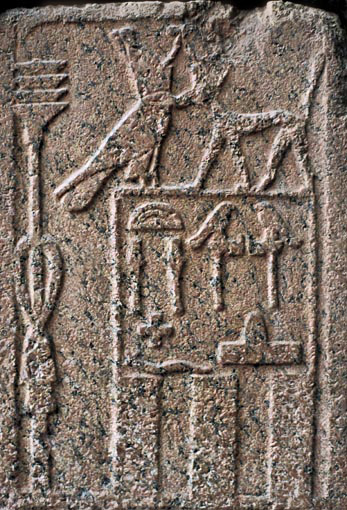
Image source
|
From _Hierakonpolis_, Part 1, by J. E. Quibell, B.A., With Notes by W. M. F. P.
TeVelde explains further:
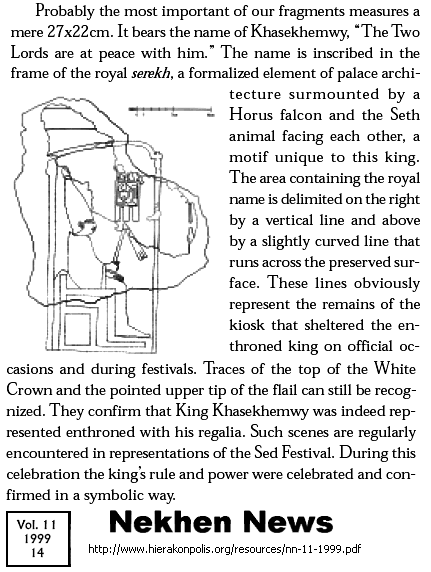
"The Horus name of a successor of Peribsen is Khasekhem (the
power has appeared). It has been suggested that Khasekhem is
identical with Khasekhemui (the two powers have appeared). If
that is indeed the case, 2) then we should have a development
reminiscent of Sekhemib taking the Seth name Peribsen. Over the
serekh in which Khasekhemui is written, however, the Seth-animal
does not appear alone, but in company with the Horus falcon. The
name Khasekhemui is sometimes supplemented htp nbwy imyw.f
(the two lords who are in him, are reconciled). Thus both Peribsen's
Seth name and Khasekhemui's Horus-Seth name proclaim the
reconciliation of Horus and Seth."
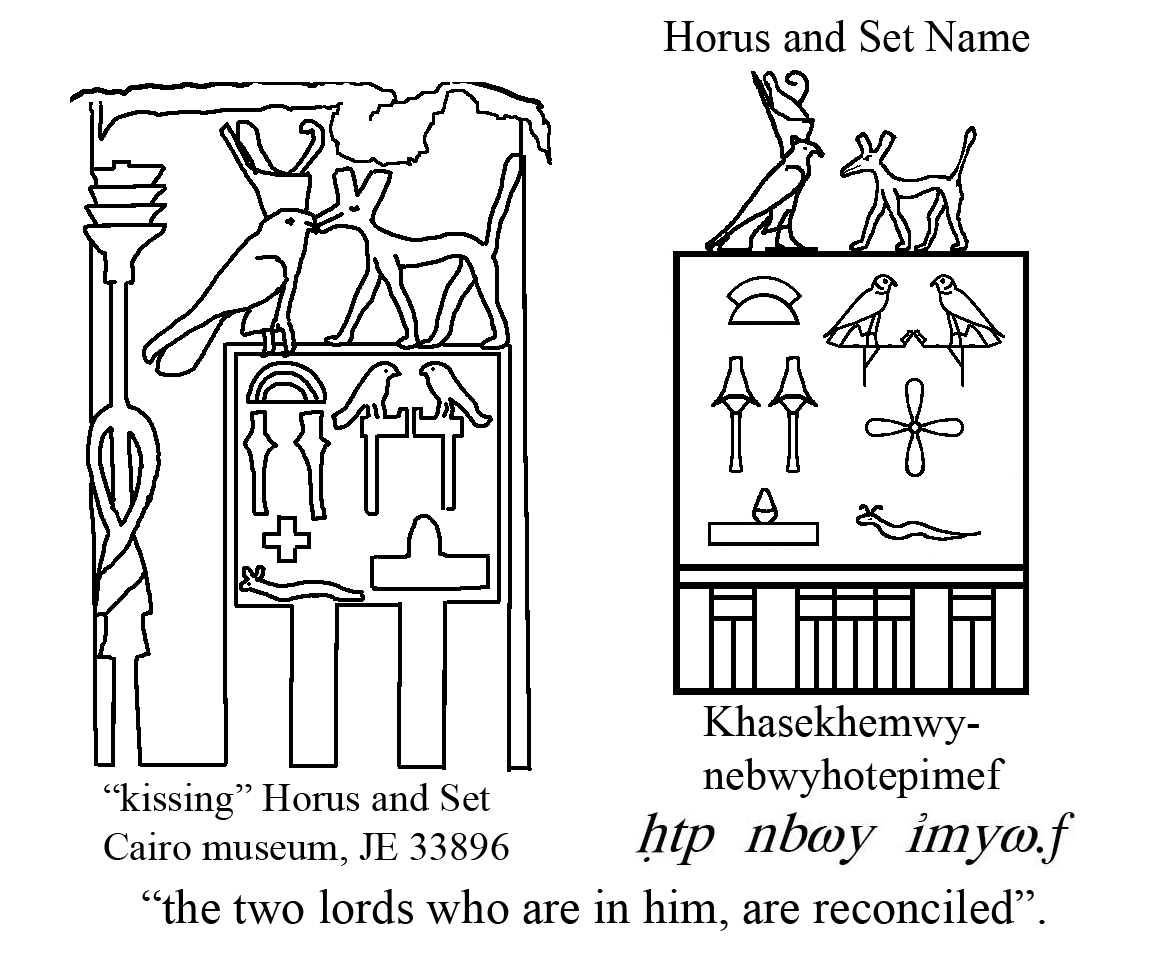 _Encyclopedia of the Egyptian Pharaohs_ by Darrell Baker gives the hieroglyphs (page 177), which I referred to when creating the serekh
Here is that door jamb in its entirety:
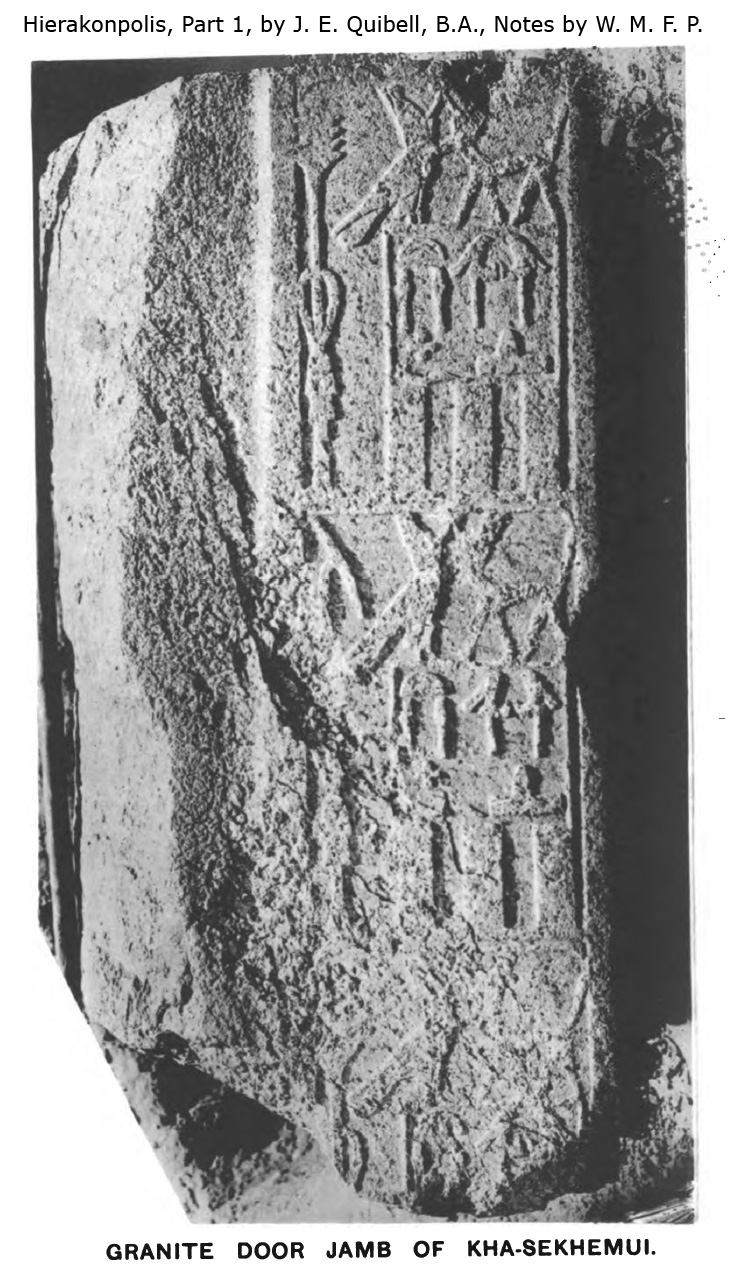 From _Hierakonpolis_, Part 1, by J. E. Quibell, B.A., With Notes by W. M. F. P.
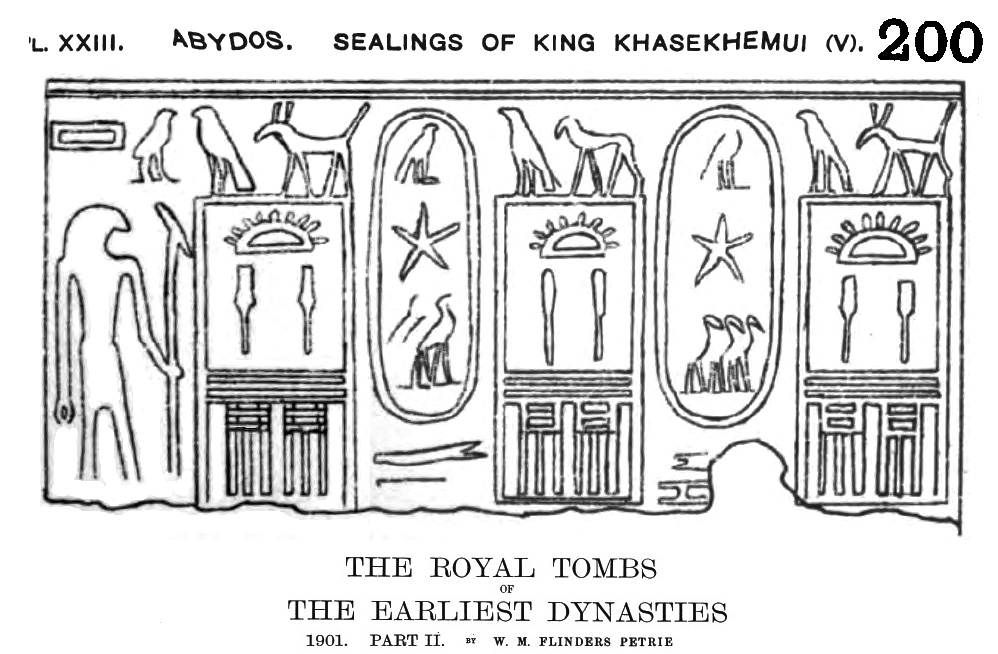
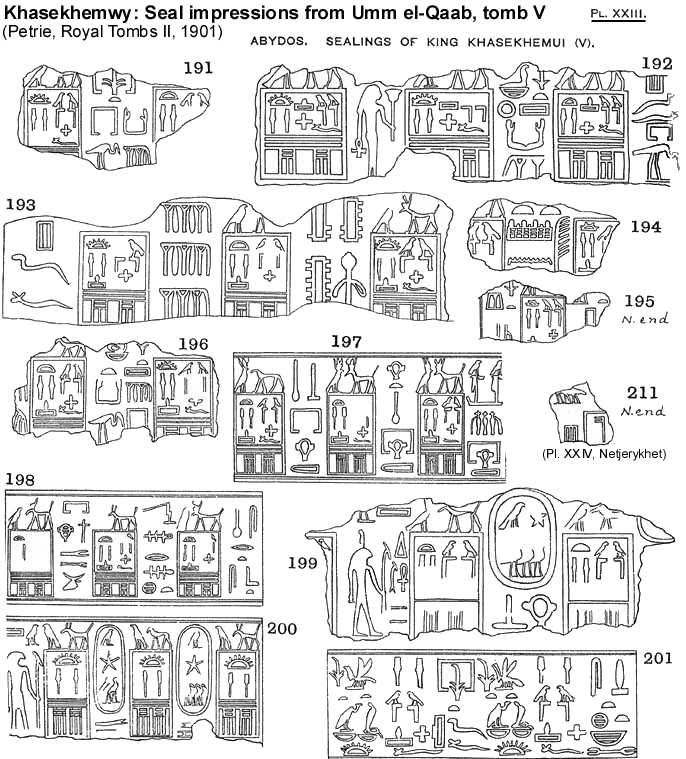
Furthermore, Petrie in _Royal Tombs II_ shows Khasekhemwy's seal impressions that were found in Umm el-Qaab, tomb V. Fortunately, this book has been scanned by Google, as before we could only depend on the image capture made by "FRAF": |
|
What is going on with seals 197 and 198? The image representing Set is undergoing changes. Sometimes it is as the traditional Set animal, and sometimes it is different. Could it be in the second Dynasty, they hadn't quite decided on its exact representation?
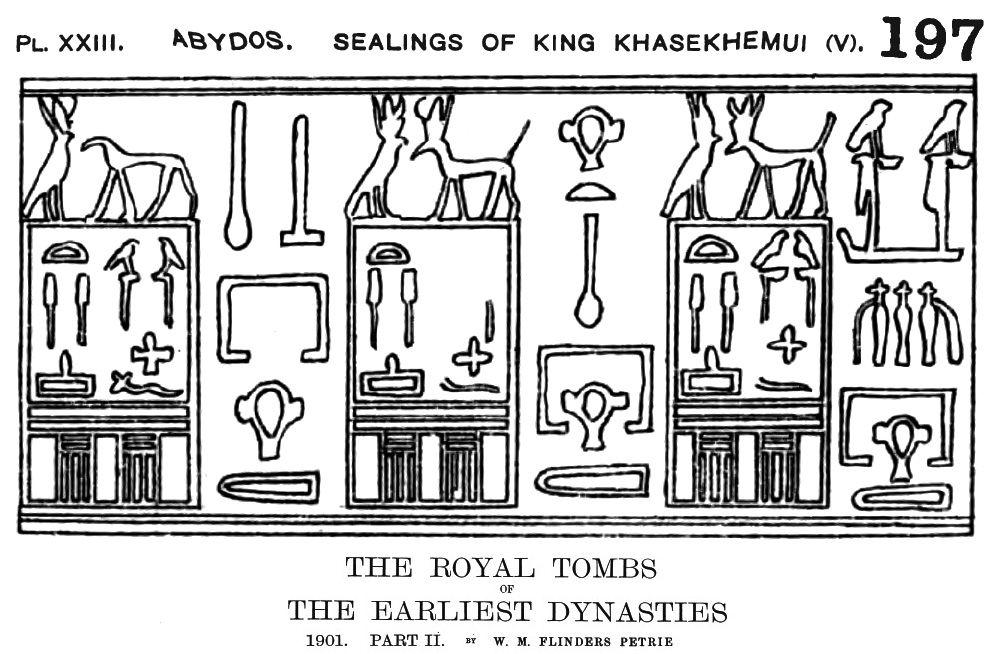 With a closer look, two of the Set and Horus combinations are wearing the double crown (Pschent) combining both the crowns of Upper and Lower Egypt.
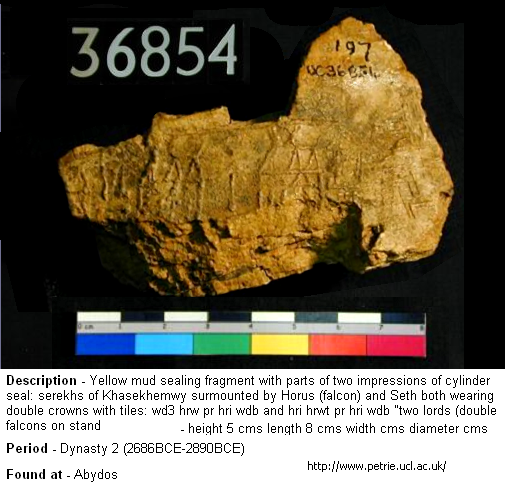 Period - Dynasty 2 (2686BCE-2890BCE) Found at - Abydos, height 5 cms length 8 cms width cms diameter cms Petrie Museum UC36854
|
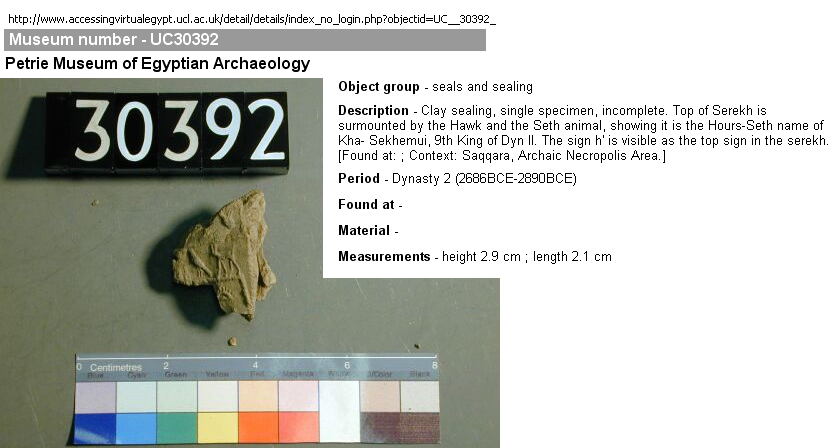
| "Description - Clay sealing, single specimen, incomplete. Top of Serekh is surmounted by the Hawk and the Seth animal, showing it is the Horus-Seth name of Kha- Sekhemui, 9th King of Dyn II. The sign h' is visible as the top sign in the serekh." |