
The obverse is inscribed 'Setnakht MeryAmun' (Set is powerful, Beloved of Amun)
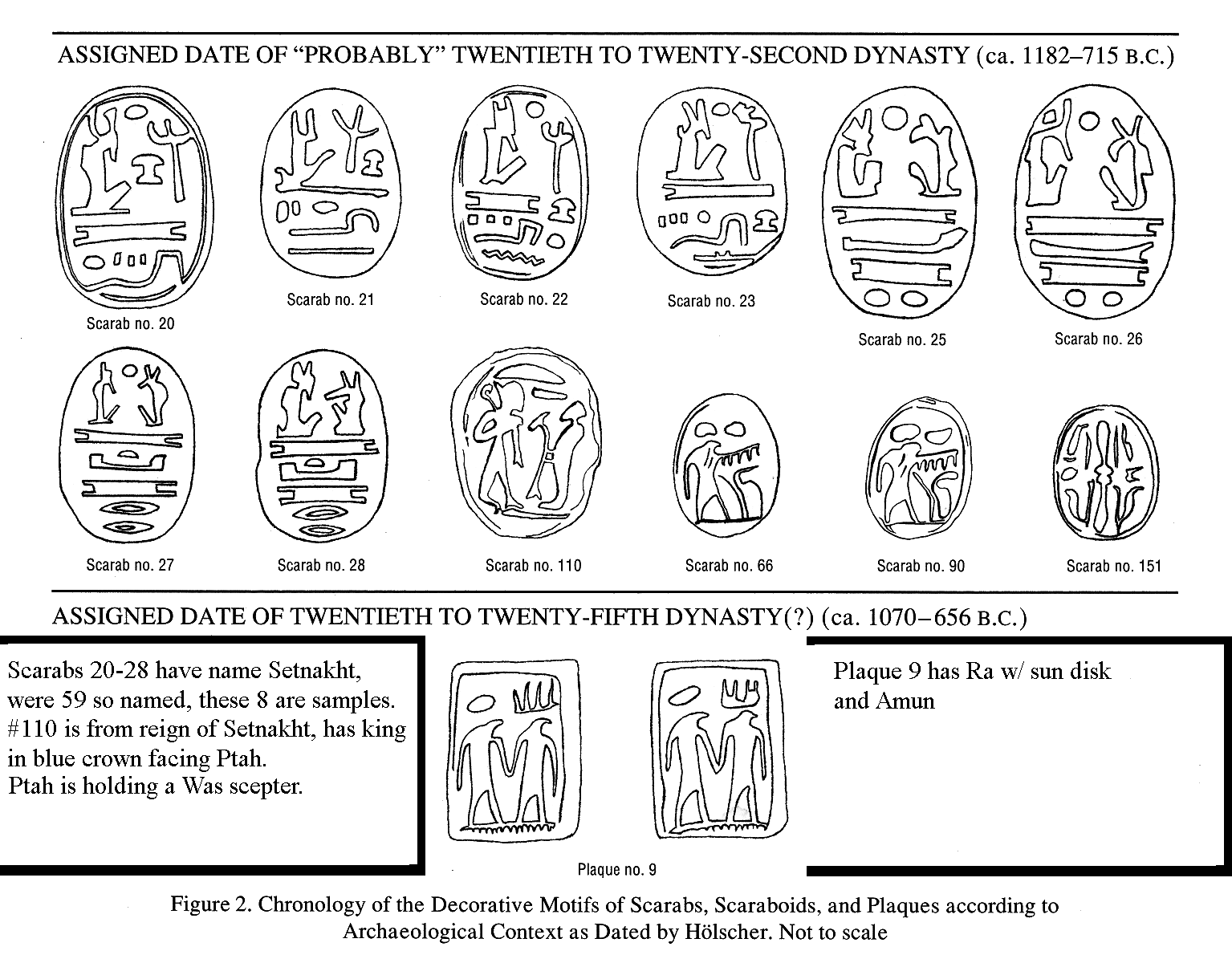
Click to see all eight samples
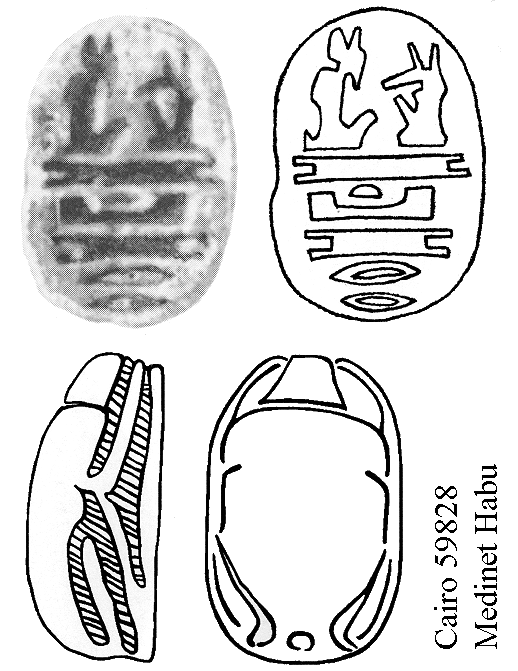
The nicest of the lot, Click to see it larger
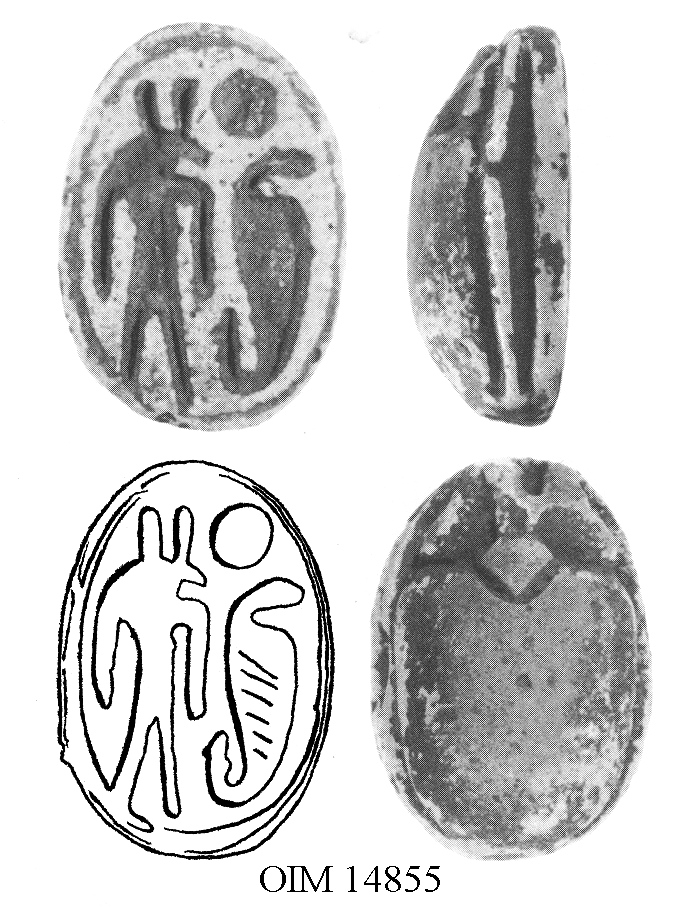
Here's one with Set and an Uraeus, Click to see it larger
Faience, with patches of brown glaze, 25.5 X 18.0mm
19th to 21st Dynasty, 1293-945 B.C.E.
A correspondent shared with me a scarab in his private collection:
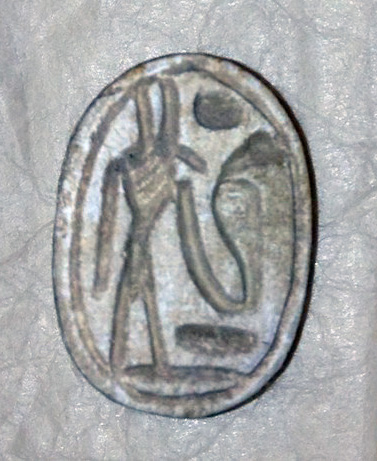
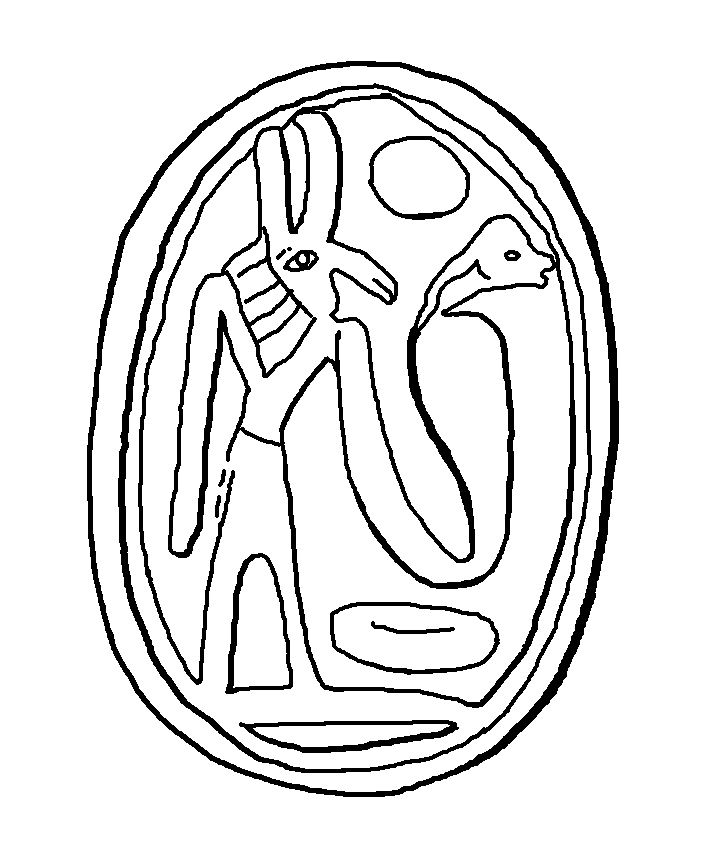
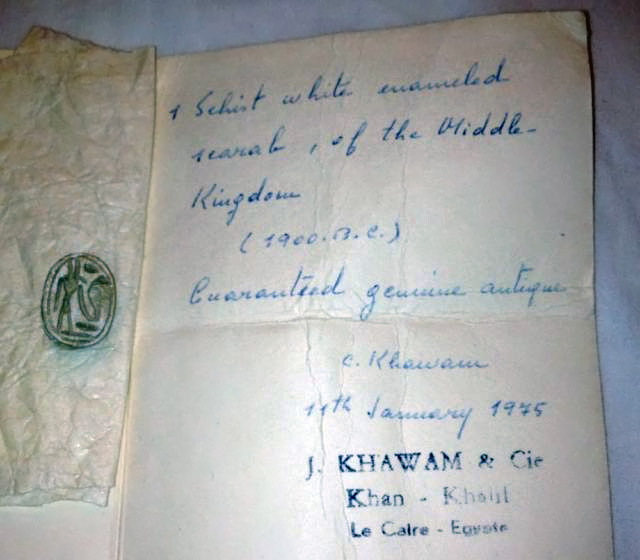
Schist white enameled scarab of the Middle Kingdom (1900 B.C.)
Guaranteed genuine antique, C. Khawam, January 11th 1975
J. Khawam & Cie, Khan - Khaul, Le Caire - Egypte
This scarab is very similar to the one above it. How did the antiquities dealer (or the Egyptologist he consulted), come to the conclusion it was from Middle Kingdom, while the one found at Medinet Habu has been dated to 19th to 21th New Kingdom dynasties? Based on the Medinet Habu scarab, it might be from the New Kingdom era.
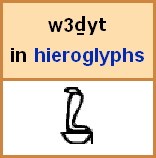
Wadjet is "the patron and protector of Lower Egypt and upon unification with Upper Egypt,
the joint protector and patron of all of Egypt with the goddess of Upper Egypt.
The image of Wadjet with the sun disk is caller the uraeus."(source Wikipedia)
|
"Pepi is the one who has grasped the White Crown, The one upon whom is the curl of the Red Crown; Pepi is the uraeus which proceeded from Seth, The uraeus which moves back and forth, acquiring and fetching, Restore Pepi to health, restore him to life..." |
|
White Crown=Upper Egypt Red Crown=Lower Egypt Pepi - there were two King Pepi's, Pepi I and Pepi II, cartouches here |
|
- Adapted from two different translations of utterance 570 of the Pyramid Texts, Pepi I: Vestibule, West and East Walls: _The Literature of Ancient Egypt_, edited by William K. Simpson, pages 260-261 _The Ancient Egyptian Pyramid Texts_,James P. Allen and Peter Der Manuelian, page 178 |
There's a few good instances of the Was Scepter. Here's one that is unique in that it suggests it was being used for more than just royalty:
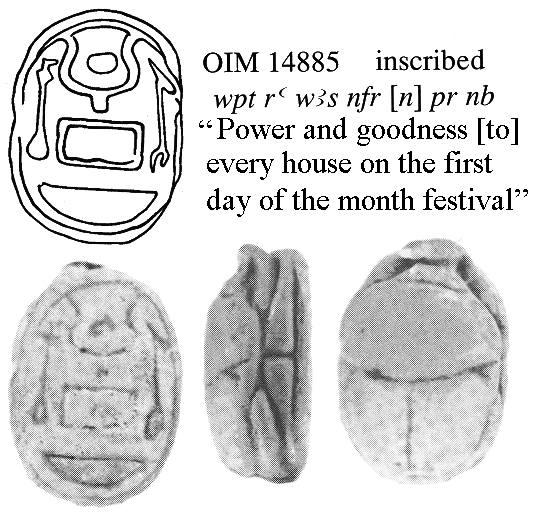
"Power and goodness [to] every house on the first day of the month festival."


