|
Was Scepters, New Kingdom Onwards
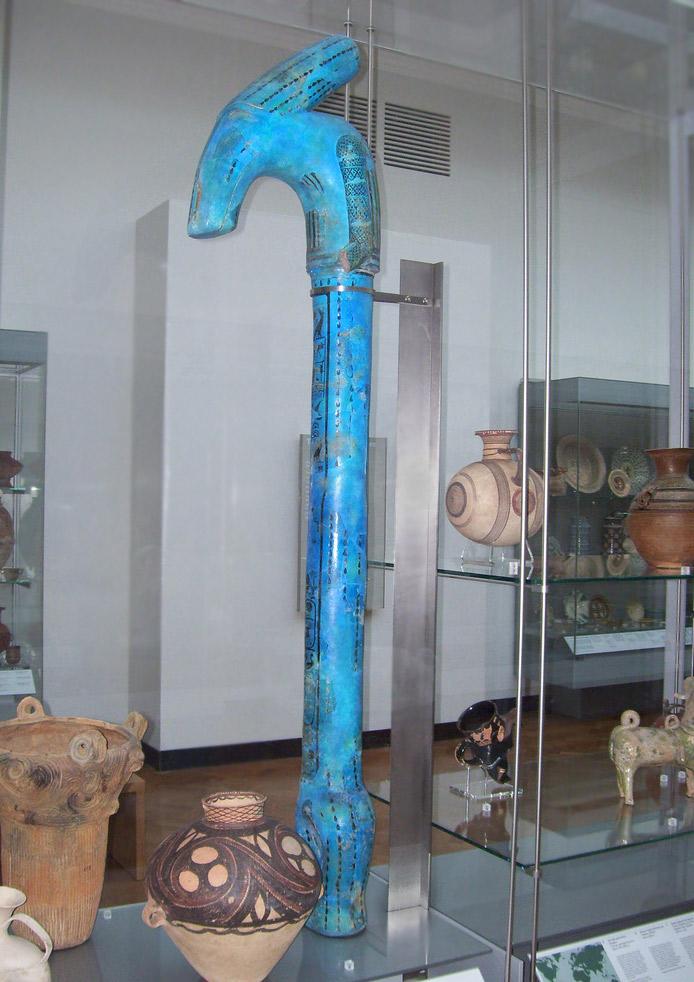
This view courtesy of Mogg Morgan
|
While tracking down the source of an image TeVelde used, I found info on the huge was scepter found at the ancient Temple of Set in Naqada:
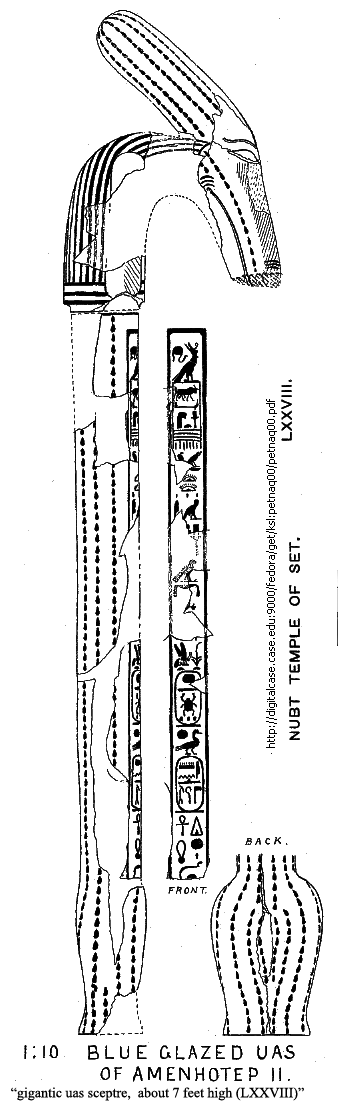
"Within the temple, in the most N.W.
chamber, were a large quantity of fragments of blue
glaze. After getting these to England, we at last
found them to be parts of a gigantic uas sceptre,
about 7 feet high (LXXVIII). This could be
mainly restored, and has been erected at South
Kensington Museum. It gives a fresh Ka name,
vulture and uraeus name, and golden hawk name,
though too much broken to be all restored with
certainty. It was made by baking the sandy core
in 8 or 10 separate pieces, each made on a centering
of straw twist. These were engraved with all the
devices, placed in one column, with the head-piece
separate, covered with glaze and fired in a kiln, which
was capable of baking a length of five feet upright,
without letting the glaze become burnt or unequally
heated. It is the greatest triumph of glazing known
in ancient work." _Naqada and Bellas_, Petrie, page 68
Thanks to Jon Bodsworth via 'cyberlynx' _wAs Sceptre Theories_, and Mogg Morgan of Ombos - House of Life we do have some idea of its appearance:
|
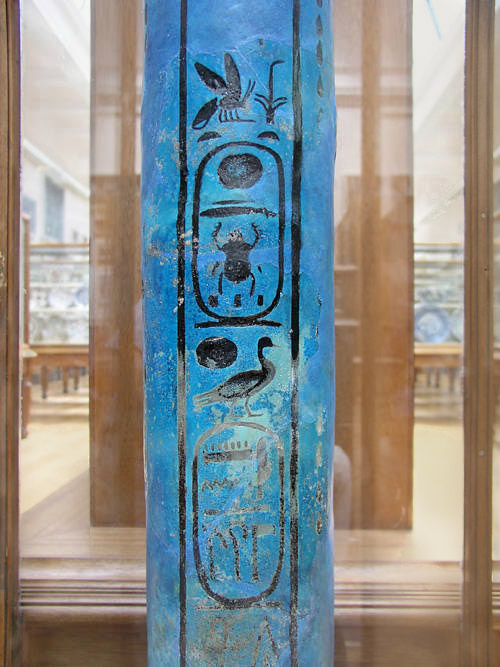
The above photo © Jon Bodsworth.
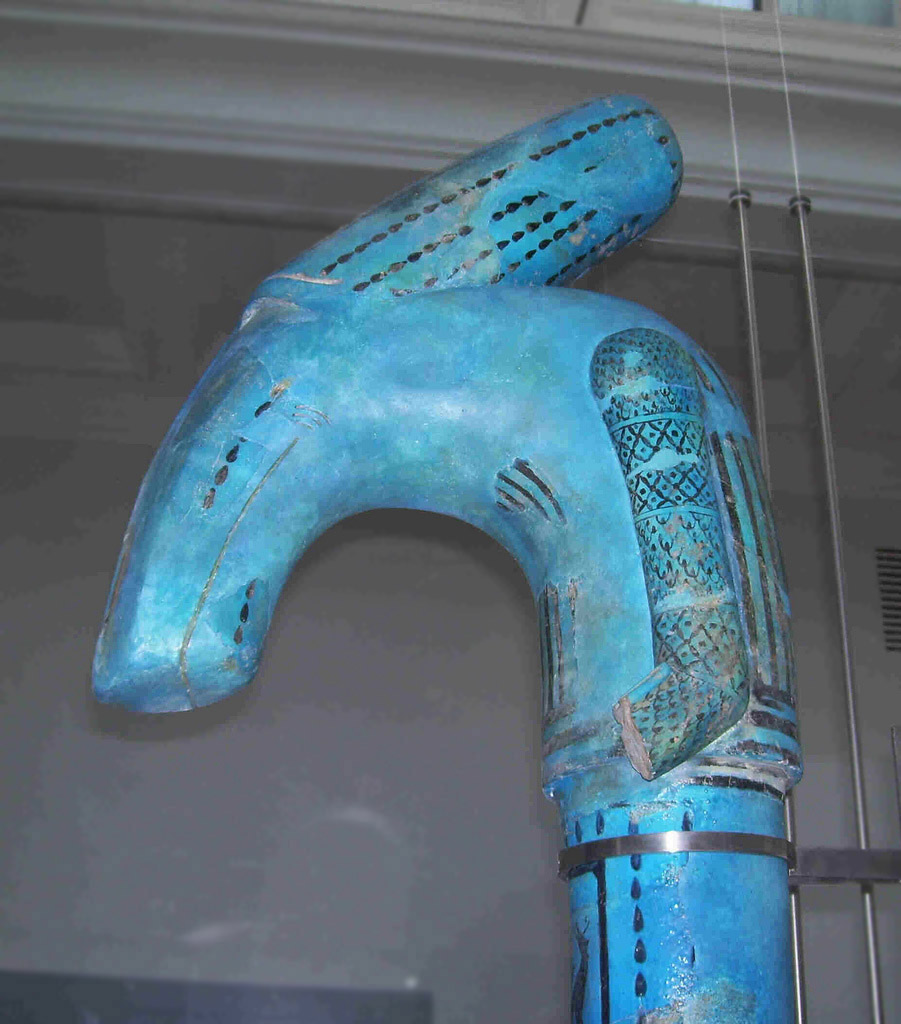
This view courtesy of Mogg Morgan of Ombos - House of Life
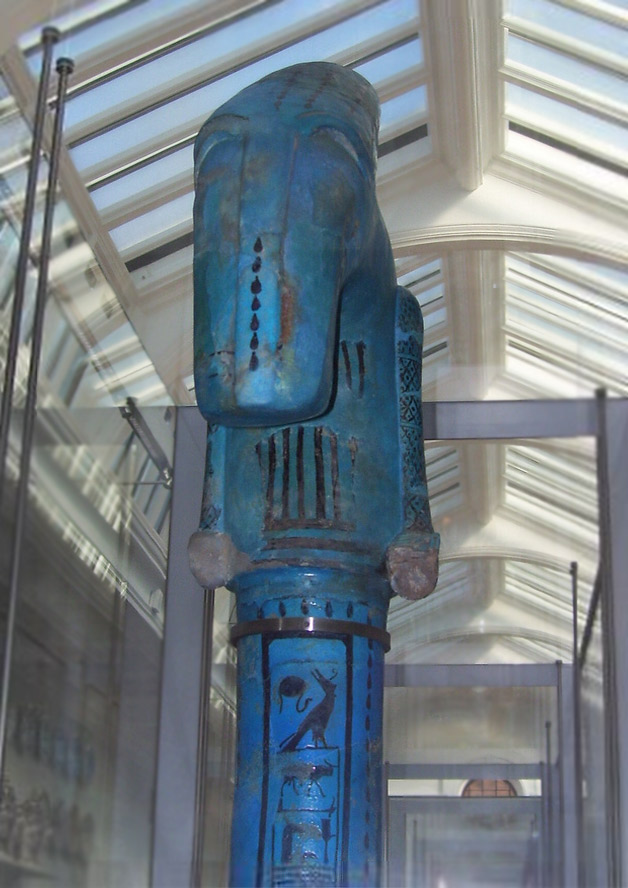
Frontal view also Mogg Morgan
Could the scepter have had Ka arms when it was new?
|
I was privileged to see a complete scepter while seeing the treasures of King Tut in 2005 at the Lacma museum:
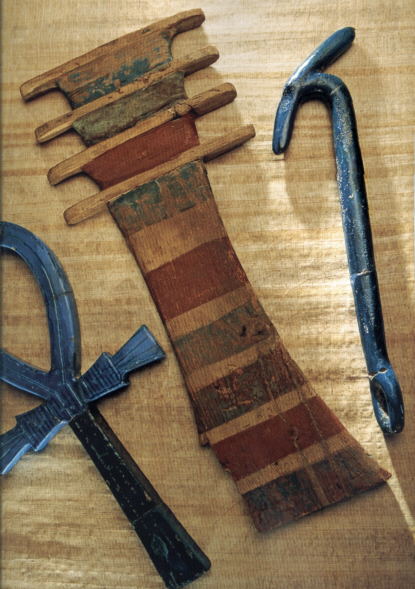
faience Ankh, wooden Djed, and faience Was scepter
It is about 16 inches high (40cm), made of faience and comes from the 18th dynasty, reign of Amenhotep II. It was found in Thebes, in the Valley of the Kings, in Amenhotep II's tomb, as did the Ankh and wooden Djed pillar also seen in the above photo.
(Pardon the book scan. I would have had my own photo, if it had been allowed!). So this scan comes from the companion book to the exhibit, _Tutankhamun and the Golden Age of the Pharoah_, photos by Kennett Garrett and text by Zahi Hawass. Hawass doesn't accept the many conclusions of other scholars and declares the identification with Set not "identified satisfactorily".. However, the vast majority agree, it is Set.
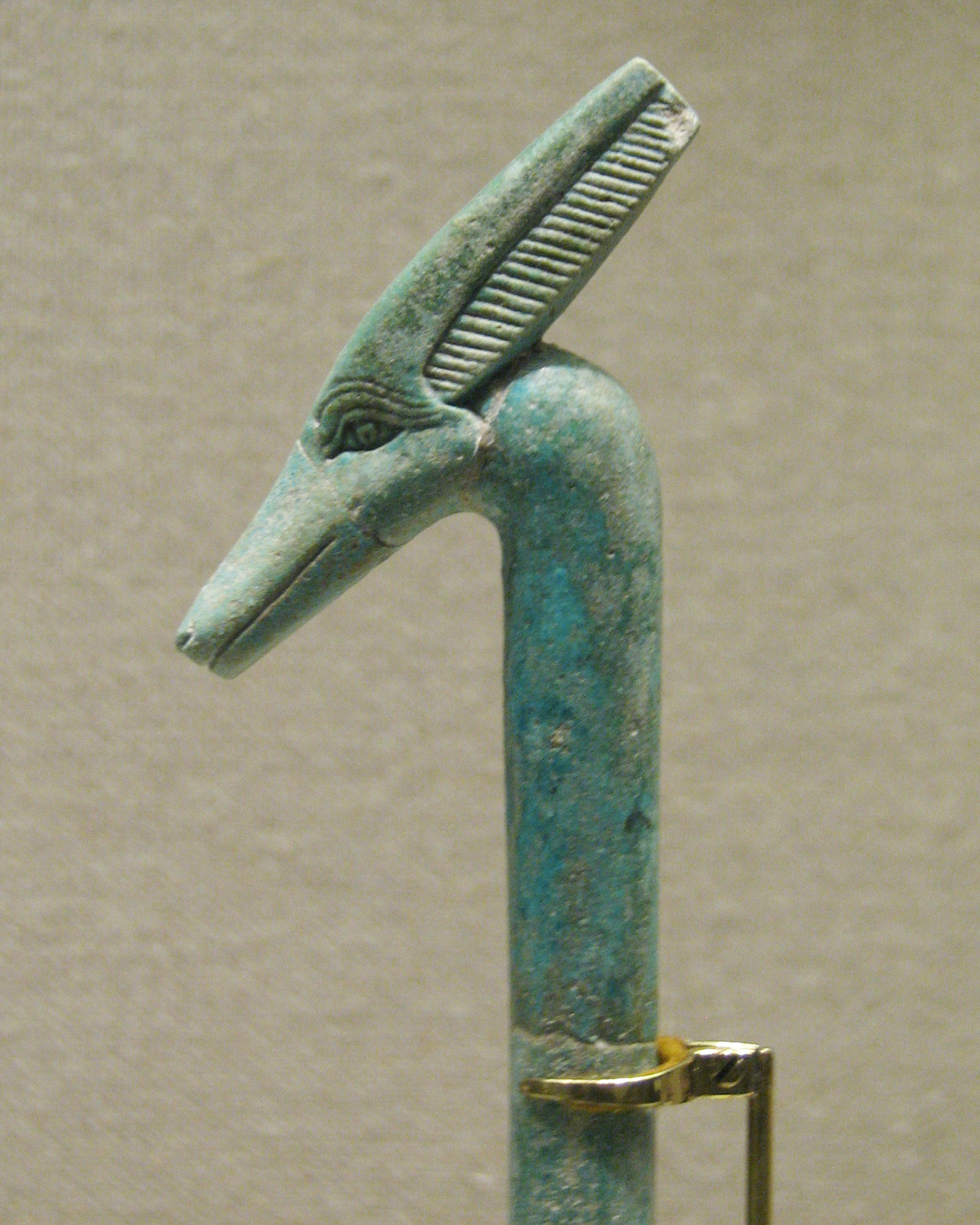
Also, look at the close up of its head. It has Set's eyes and snout, and the top part is his ears seen in direct profile, so that two become appearing as one:
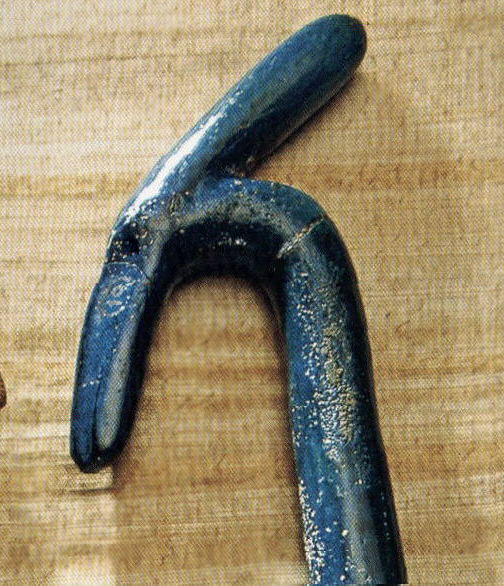
This is Set's head
Tutankhamun had another was scepter, this one with much more detail, even though it is considerly smaller than the one above:
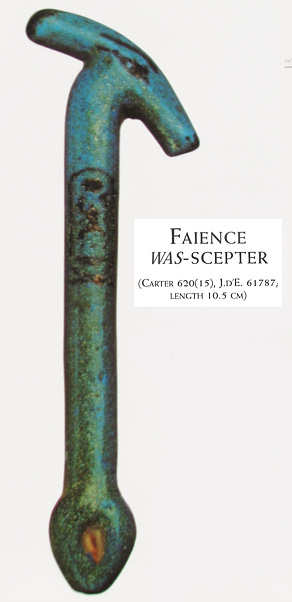
Just over 4 inches (10.5cm) at the Cairo museum #61787
Photo from Tutankhamun, text T. G. James, photos A. DeLuca
Large detail underneath
Another Was scepter, this one at the British Museum:
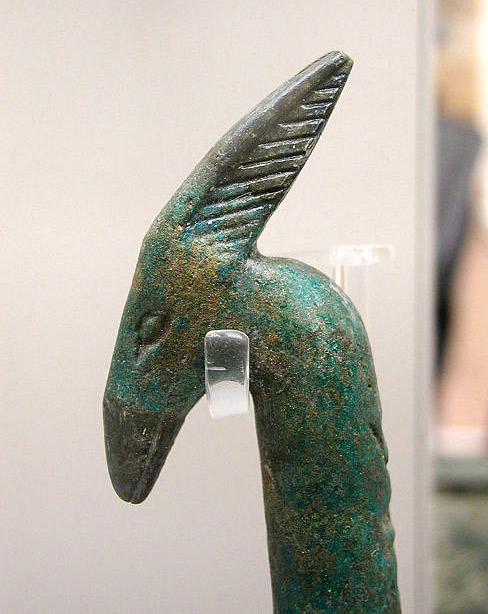
Photo courtesy of Egyptarchive.co.uk, Jon Bodsworth
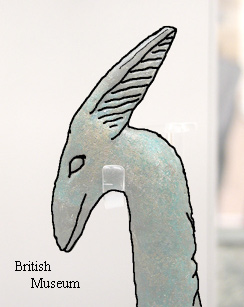
line drawing overlay to show details...
The Metropolitan museum in New York has one very similar to this:
|
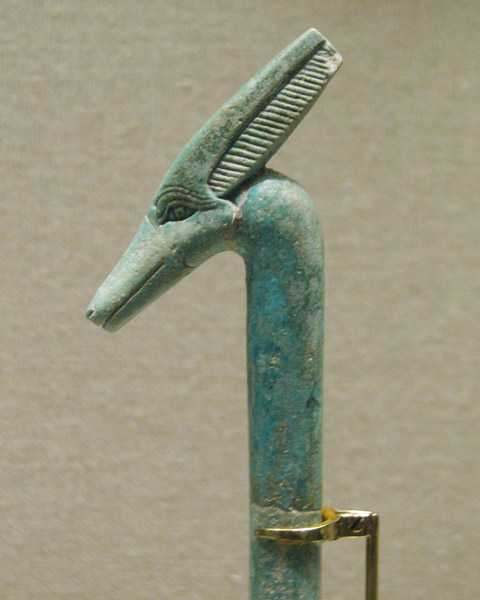
Top and bottom (center part restored) of a faience votice was-scepter, excavated at Faras in Nubia, Late period, MMA 41.2.9
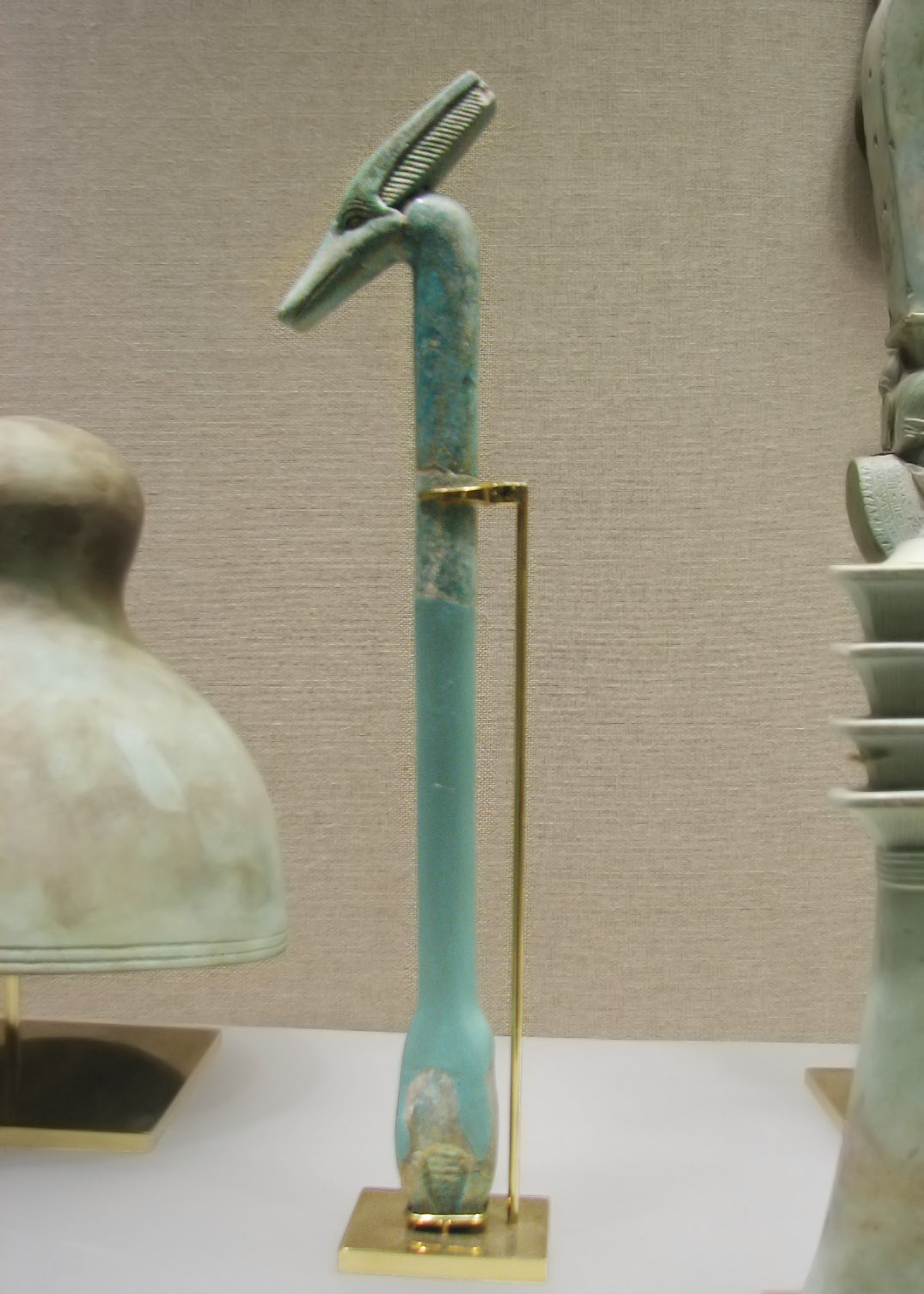
(Full 5x7 size underneath)-(photo credit Joan Lansberry (this one 2008, above one 2009)
The Brooklyn Museum also has a was scepter:
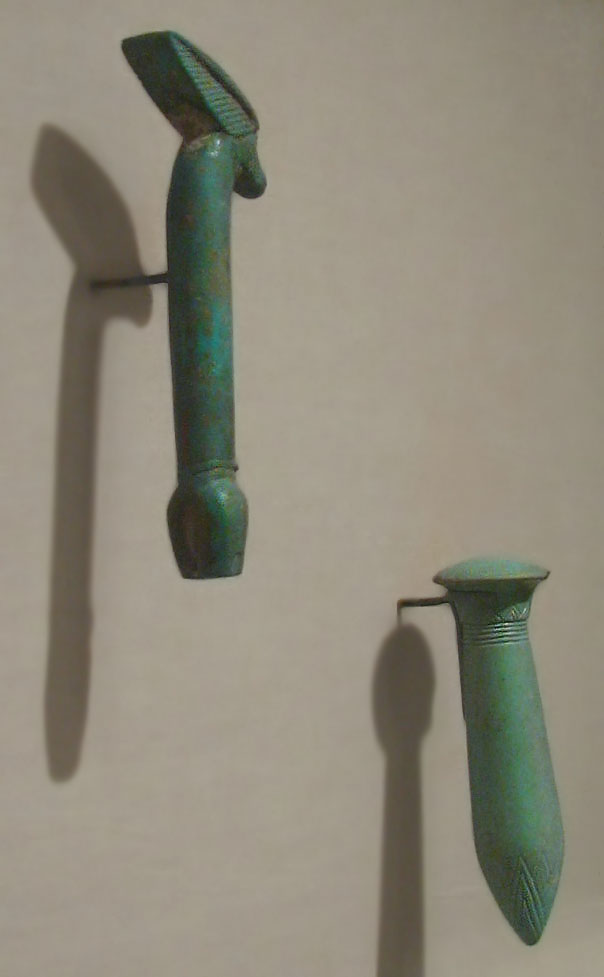 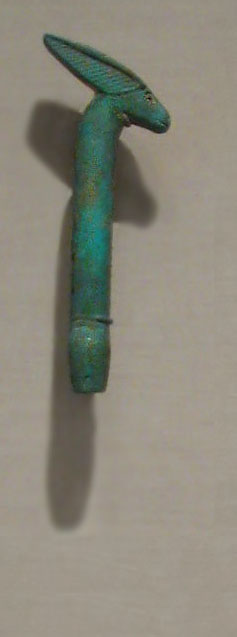
Was-Scepter, Wadj-Scepter, Faience
Late Period - Macedonian Period, circa 664-305 B.C.E)
Provenance not known
Broolyn Museum 37 1650E, 37 886E, Charles Edwin Wilbour Fund
Photo © Joan Lansberry, May 2008
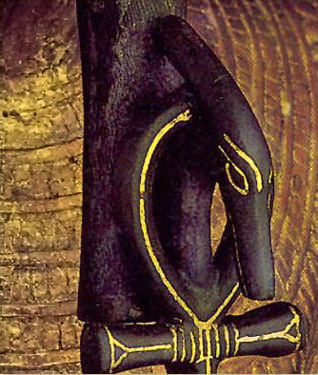
This intriguing was and ankh seen at touregypt.net,
no attribution given.
However, while perusing Tutankhamun, text T. G. James, photos A. DeLuca, I found the source:
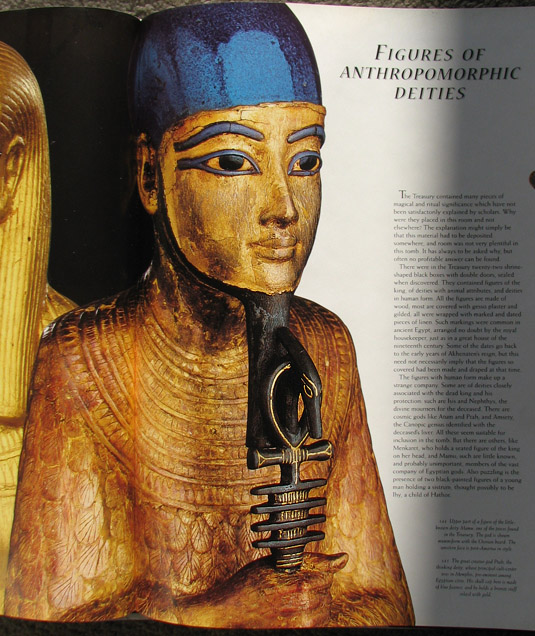
Gilded wood statue of Ptah, with bronze was scepter, inlaid with gold.
The base titles him, Ptah, Lord of Ma'at, and also names Tutankhamun
That base is also shaped like the hieroglyph for Ma'at (truth, balance, connective justice.)
Carter 291 A, J.d'E 60739 (Cairo Museum), Height 60.2 cm (almost 24 inches)

Traces from various photos. The djam scepter is from the funeral procession of Nespekishuti at the Oriental Museum in Chicago
|
There are also tiny amulets of the was scepter:
|
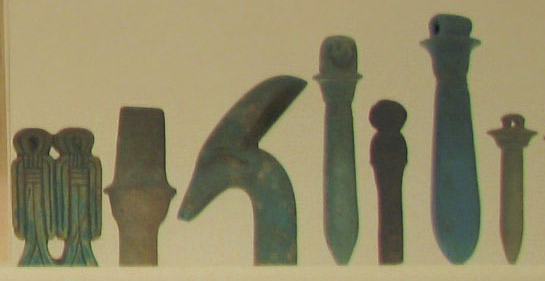 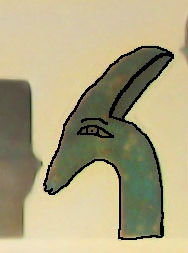
Found on a shelf with lots of tiny amulets at the Met museum, details unknown
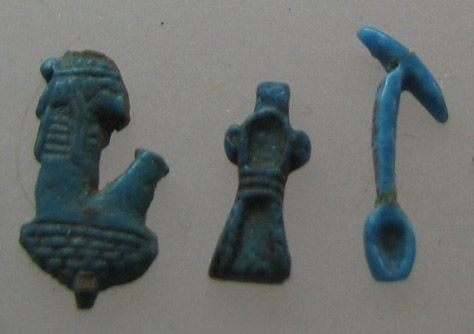
These amulets at the Met museum were not even an inch long!
I didn't capture info, but I think I found them in the 18th dynasty study room
|
And here's another Was found at the Met draped with a Uraeus snake which is wearing a Shen symbol for eternity:
|
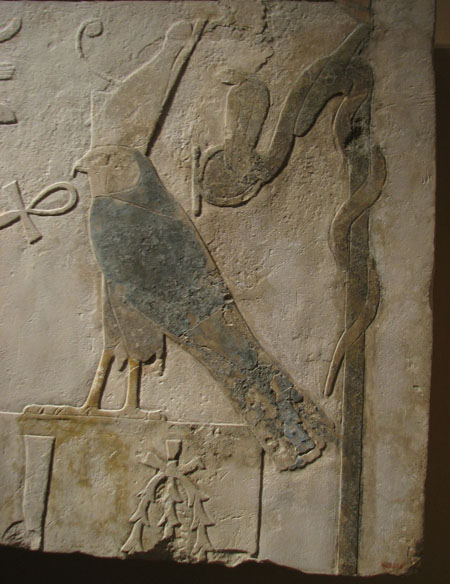 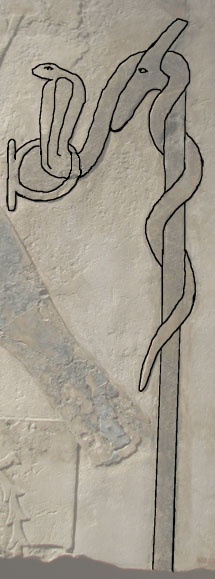
From a relief of Amenemhat I and Senwosret I
Dynasty 12, c. 1991-1962 B.C.
From Lisht, North Pyramid, MMA, Rogers Fund 1908
Limestone

Personified was sign, temple of Seti I at Abydos. Nineteeth Dynasty,
_Reading Egyptian Art_, Richard Wilkinson
|
This isn't the only instance of a Was scepter with the ability to grasp. A Ramesside era stele featuring Amun-Re in the British Museum also has such a Was:
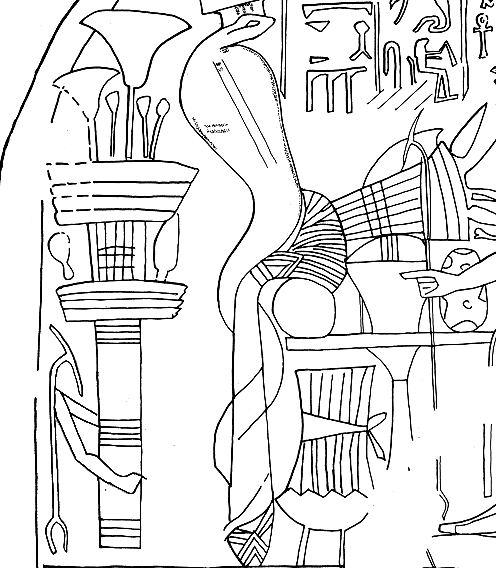
2.812
- Hieroglyphic Texts from Egyptian Stelae-, Part 12
edited by M.L. Bierbrier, British Museum Press
"There are two registers on this round-topped stela
decorated with scenes in sunk relief and incised texts. In
the upper register the ram-headed Amen-Re' is enthroned
on the right on one side of an altar heaped with
offerings. The goddess Werethekau in the form of a
serpent is entwined around a lotus flower on the left side
of the altar. Behind her a small was-sceptre carries a large
floral bouquet in its arms."
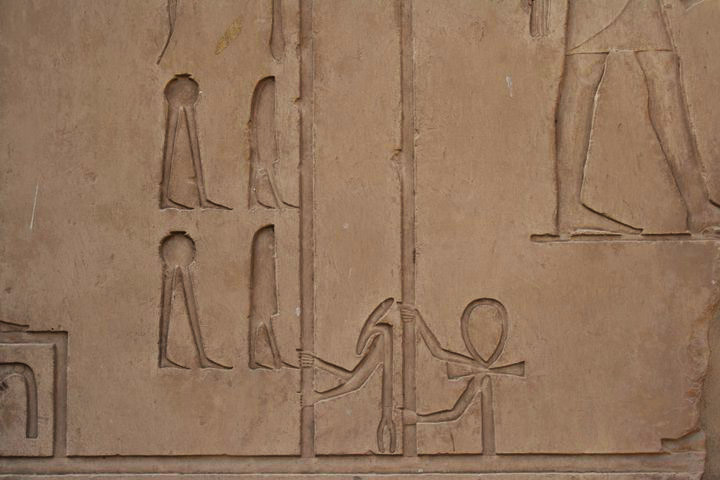
Hans Kontkanen, who visited Luxor in December 2010, shows an armed Was and Ankh, in context they are holding standards high. I think the kidney bean shape symbolizes the meteoritic "iron of Set".
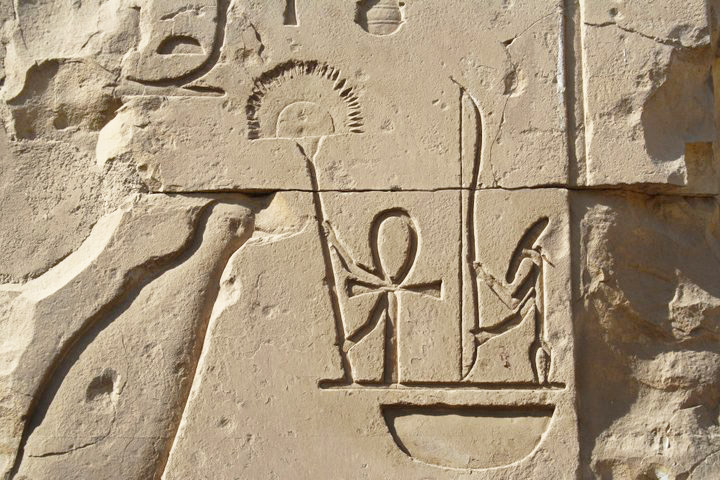
Hans Kontkanen has a photo of even more unusually active Was and Ankh, the Ankh holding a fan and the Was an archery bow.
While exploring the Global Egyptian Museum, I found two statues from the Hermitage Museum, one faience of Ptah holding a very clearly ribbed Was and the other in Bronze of Ptah with a ribbed Was:
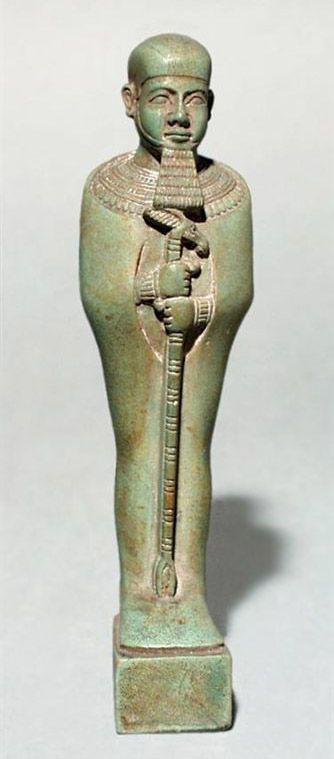
State Hermitage Museum,Inventory # - 10/002/13390
Provenance unknown,
(Recorded in the Golenischeff catalogue of 1891)
Late period, 26th Dynasty, Faience, Height (12.8 cm)
|
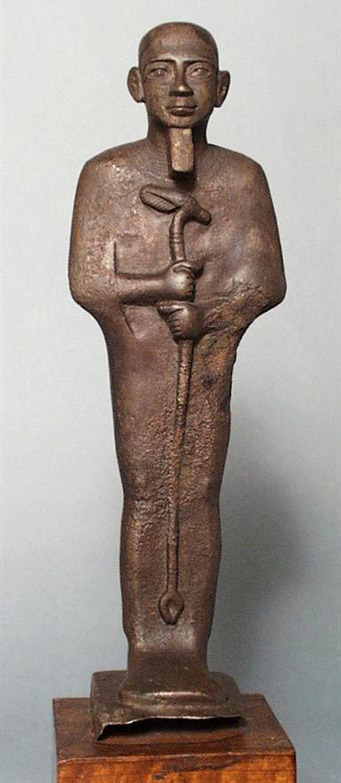
State Hermitage Museum,Inventory # - 10/002/13428
Provenance unknown,
(Recorded in the Golenischeff catalogue of 1891)
Late period, Bronze, Height (27.8cm)
|
Could the Was scepter also have associations with the spine, this region being given as Set's in the Book of the Dead? The ribs could be suggesting the divisions of the spine:
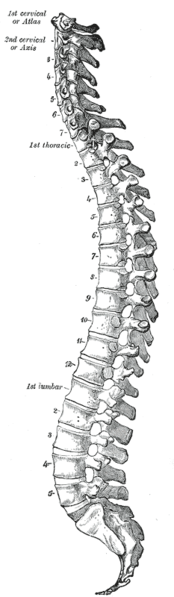
From Wikipedia
"There is also evidence identifying Seth with the pillar that supported the sky. In the Ramesseum Dramatic Papyrus, Seth is identified as a sacred pillar beneath Osiris, while according to G.A. Wainwright the djed-pillar at Busiris (Djedu) belonged originally to Seth prior to its reassignment to Osiris." (Alan F. Alford, _The Midnight Sun_, page 294)
|
  
|