|
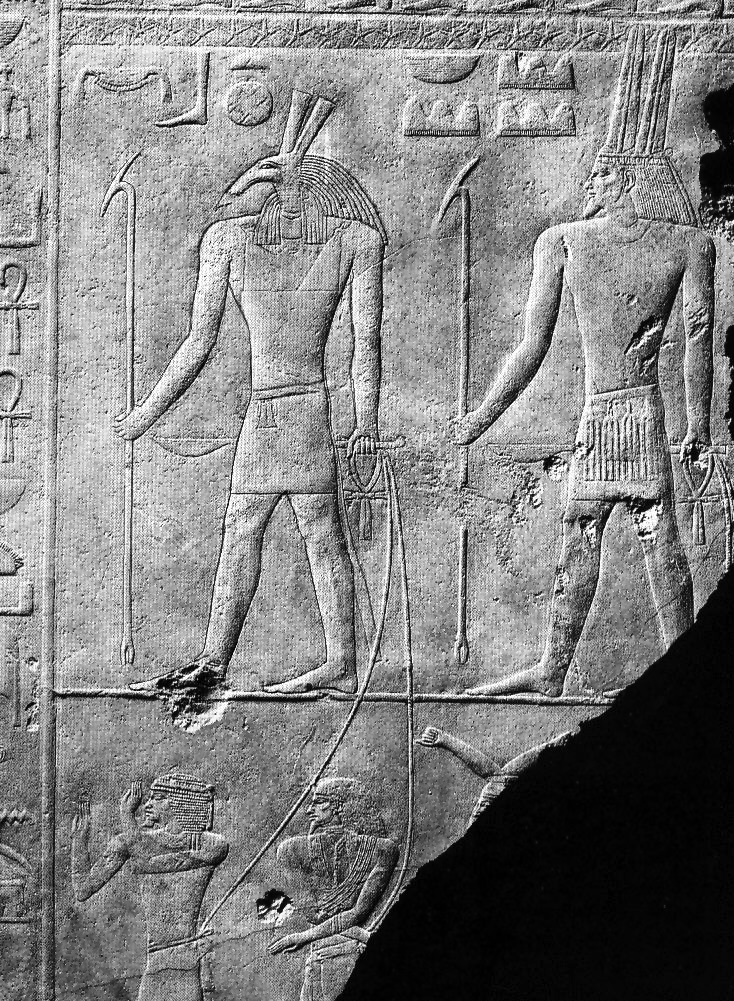
The grayscale image was scanned from a book sometime in July 2004. I found a text file I'd saved regarding it:
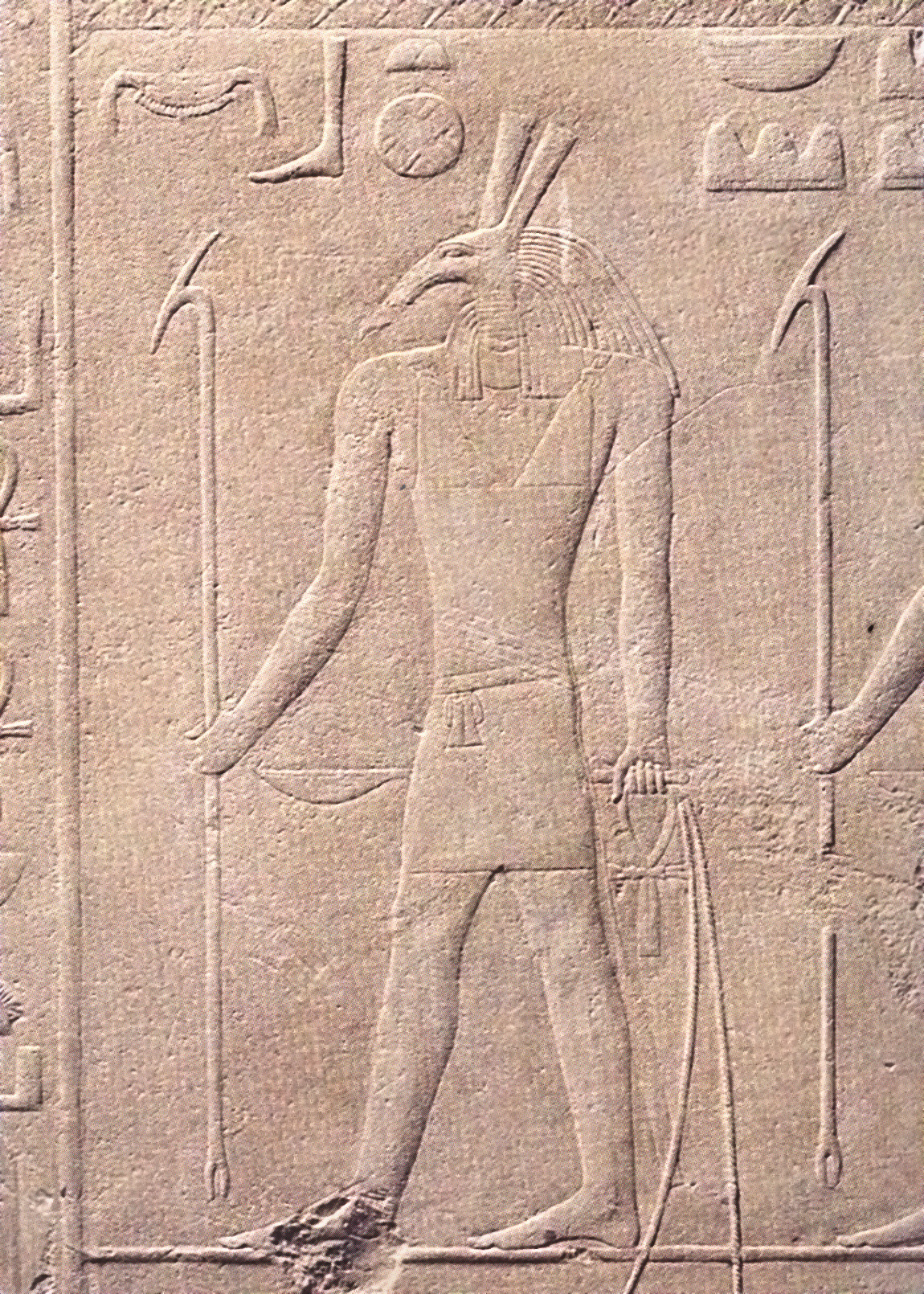
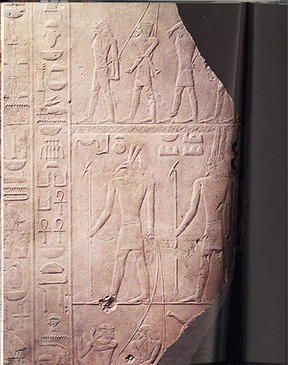
"Part of a block from the funerary temple of King Sahura at Abusir showing various deities leading foreign captives to the king. The deities are drawn on a larger scale than the foreigners and stand in a separate register above their prisoners. In their rear hands they hold ropes that cross into the lower register and attach to the captive figures. Above the deities the top of the register is bounded by a starry sky hieroglyph, but no such border is found above the prisoners and, in fact, the two registers are not separate units. Rather, they must be read together, as the ropes running from one to the other suggest, with the captives visually placed beneath the feet of the gods to show their subject status. The latter is further emphasized by the way in which most of the prisoners have their arms contorted and tied into a variety of uncomfortable positions. Although the paint has been lost from this piece, it is still possible to appreciate the extremely high quality of the relief carving. The figures of the gods exhibit the broad shoulders and low small of the back characteristic of male figures in this period."
"The Art of Ancient Egypt" by Gay Robins, Harvard University Press Cambridge, Massachusetts 1997
I also found one website which explained:
"Ludwig Borchardt excavated and brought to Berlin many columns and relieves from the funerary temple of the king Sahure in Abusir. Since there was not enough space to exhibit the columns in the new Museum at that time these were stored in a Charlottenburg depot where they were much damaged during the 2nd world war. At the end of the 1980 with the support of the society for the promotion of the Egyptian Museum (Vereins zur Förderung des Ägyptischen Museums e.V. ) restored and re-erected in an extension to the then existing Egyptian museum in Charlottenburg.
the columns will also remain in Charlottenburg and will be visible after the opening of the new Scharf-Gerstenberg Museum in 2008. The final move of the columns to the Museum island will have to wait until the completion of the reconstruction works in ca. 10 years."
Now that it is 2011, and the museum has been re-opened, a lovely book of the Berlin museum's best pieces has been published.
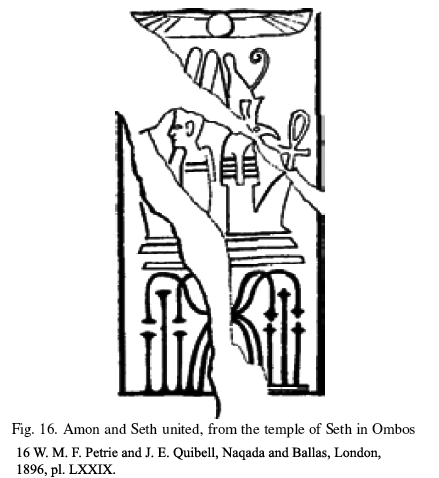
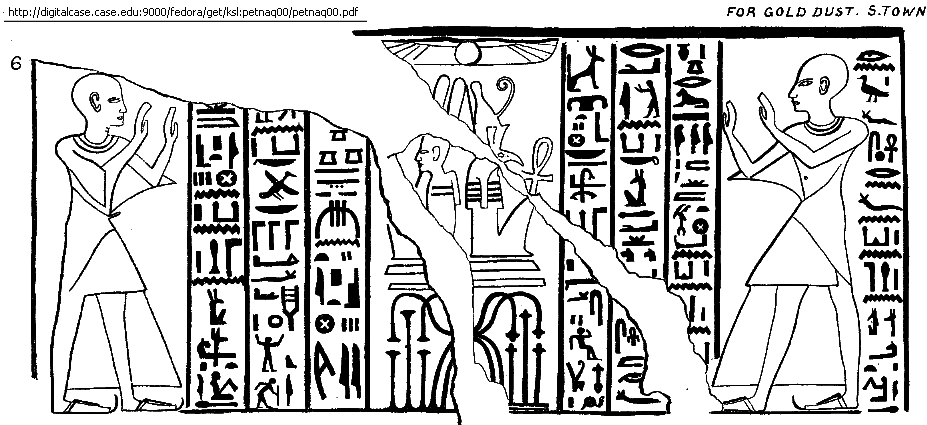
Now let's look at the relief. I first thought the god accompanying Set must be Amun, because he has a tall crown, usually characteristic of Amun. But a correspondant wrote to say she thought he looked more like Geb, via a book she had. So I went searching, for I did indeed make an assumption based on the height of the crown. Sopdu (aka Sopedu) seems to be the general consensus. Google translation of a German page notes the "two falcon feathers that protrude into the star signs in the heavens." ( Er trägt über dem
schulterlangem Haar als Kopfputz zwei Falkenfedern, die in das sternenbesetzte Himmelszeichen ragen.)
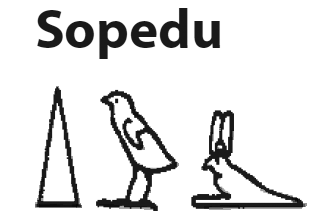
The glyphs for Sopedu/Sopdu do show a two-feather tall headdress! (Glyphs from the _Routledge Dictionary of Egyptian Gods and Goddesses_ by George Hart, page 151)
Hart describes Sopdu as "A border-patrol god in his role of ‘lord of the east’, depicted either as a crouching falcon or Bedouin warrier wearing a crown of tall plumes." So Sopdu it is. However the Liverpool museum has a rare statue in which Amun appears as a warrior with the face of Bes (Accession number: M11594). As Amun is known as both ‘the hidden one’ and ‘mysterious of form’, he could appear thusly. But this association is certain, for the Liverpool statue has an inscription in which the deity is identifed as a form of Amun-Re. Sadly, on the Berlin relief, the area to the right of the deity has been damaged, so any identifying glyphs are not available. That the head piece has two feathers is the primary clue.
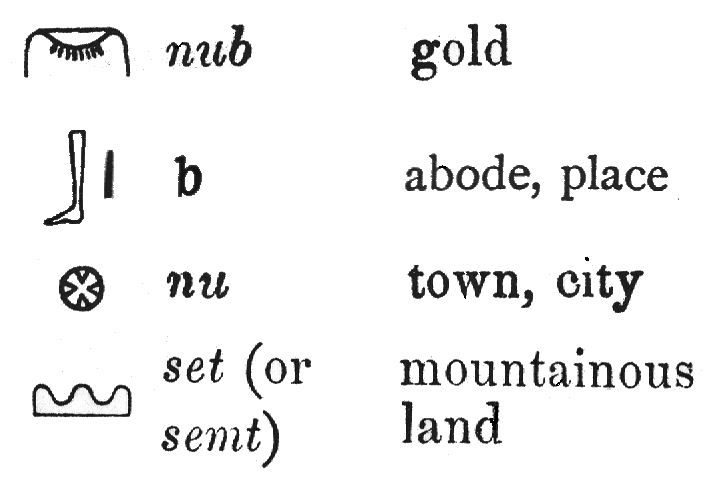
Now look at the other hieroglyphs:
|