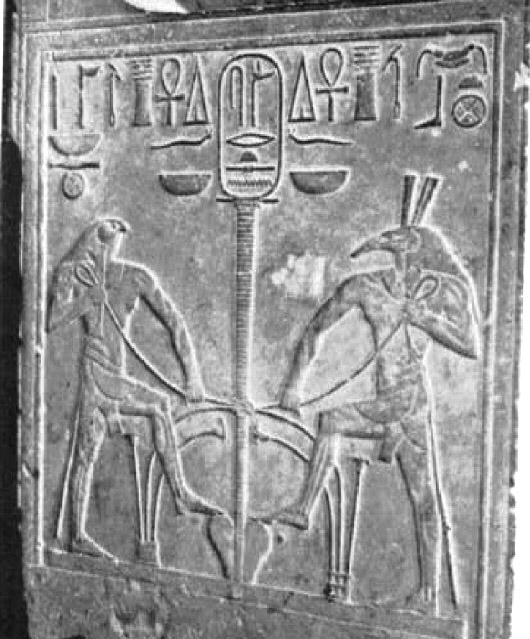
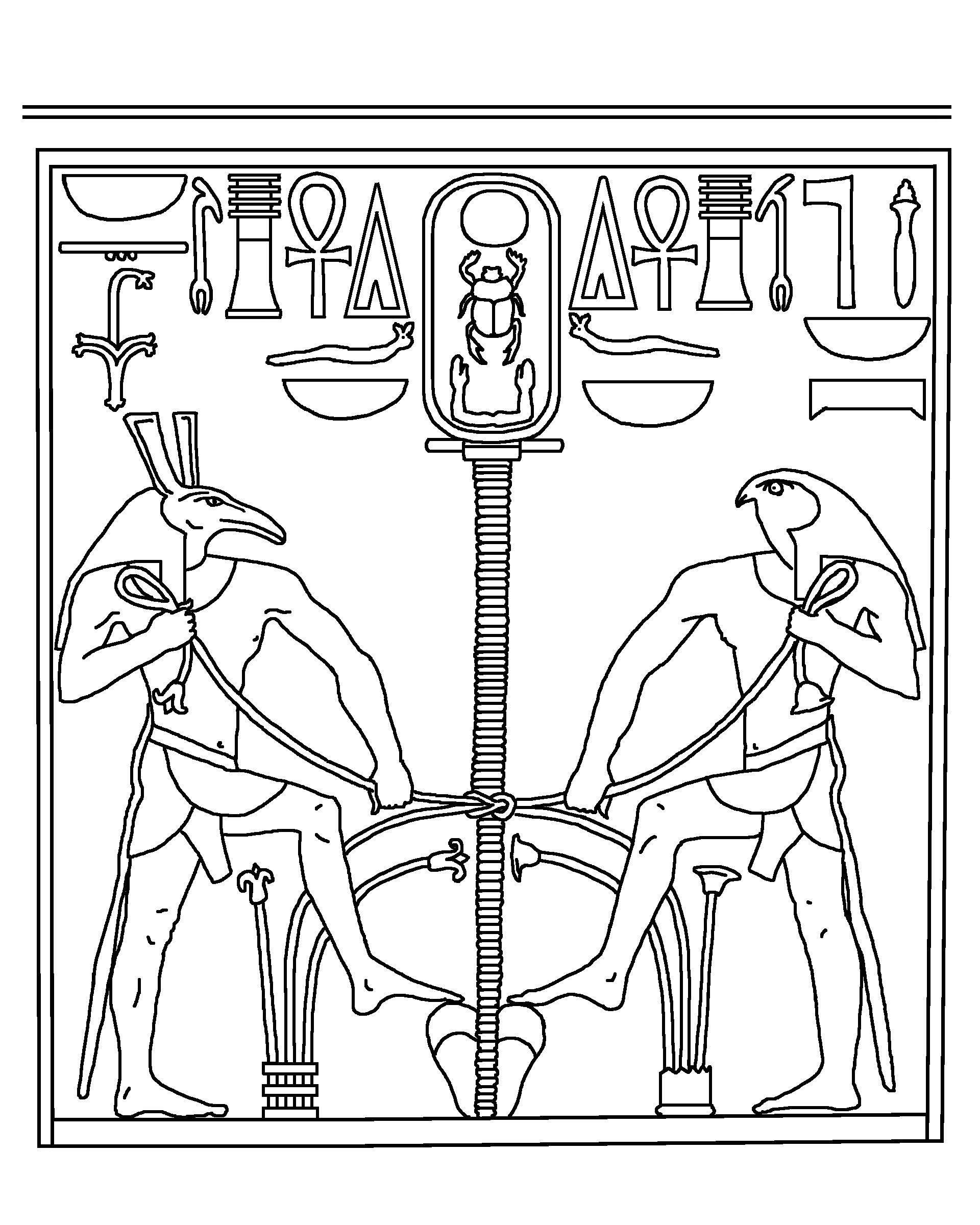
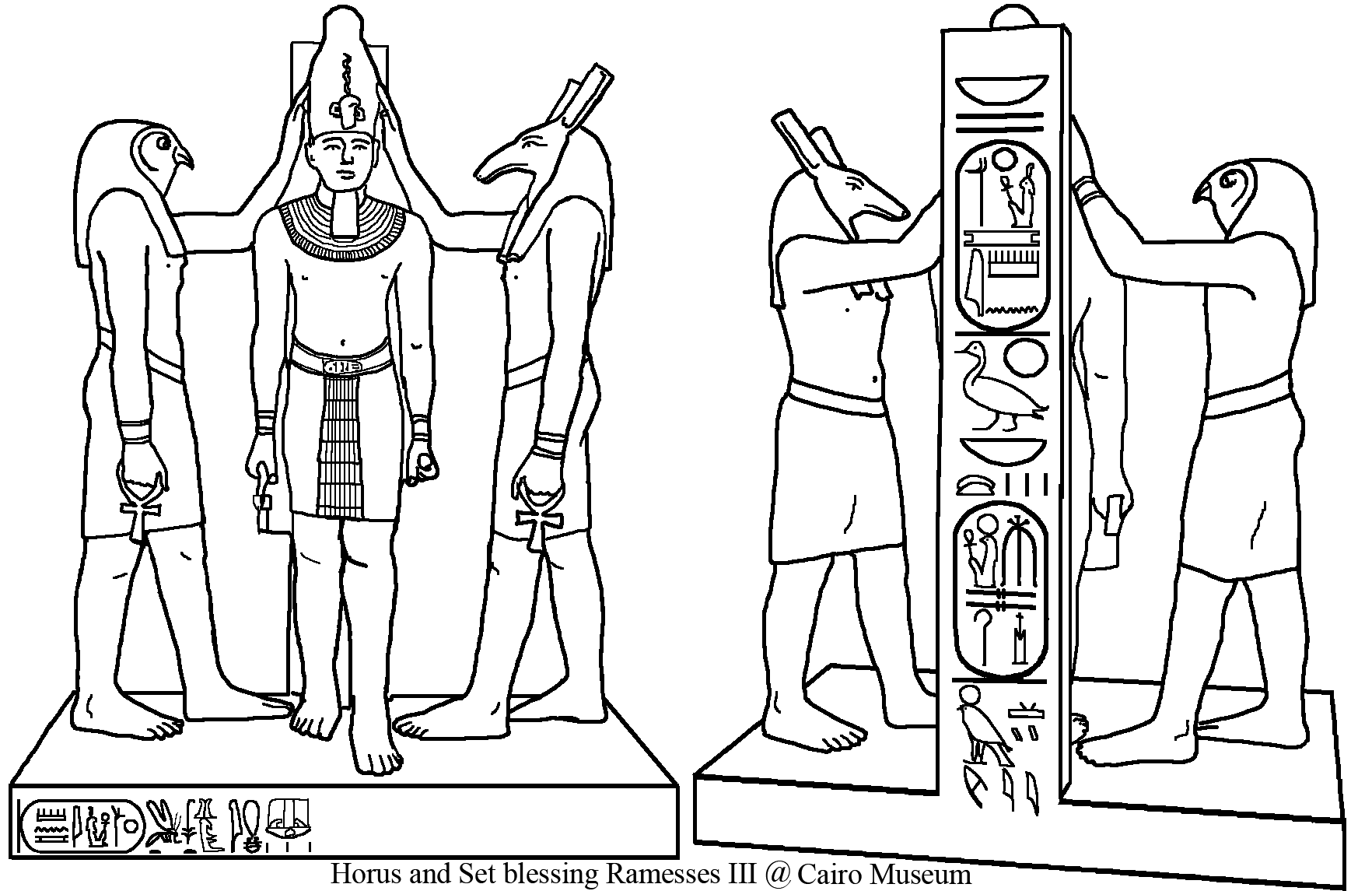
The above link is my traces of a statue at the Cairo museum in which these two gods are blessing the pharaoh Rameses III. Set is imparting to him of his great strength, while Horus is enhancing the king's vision and leadership abilities.
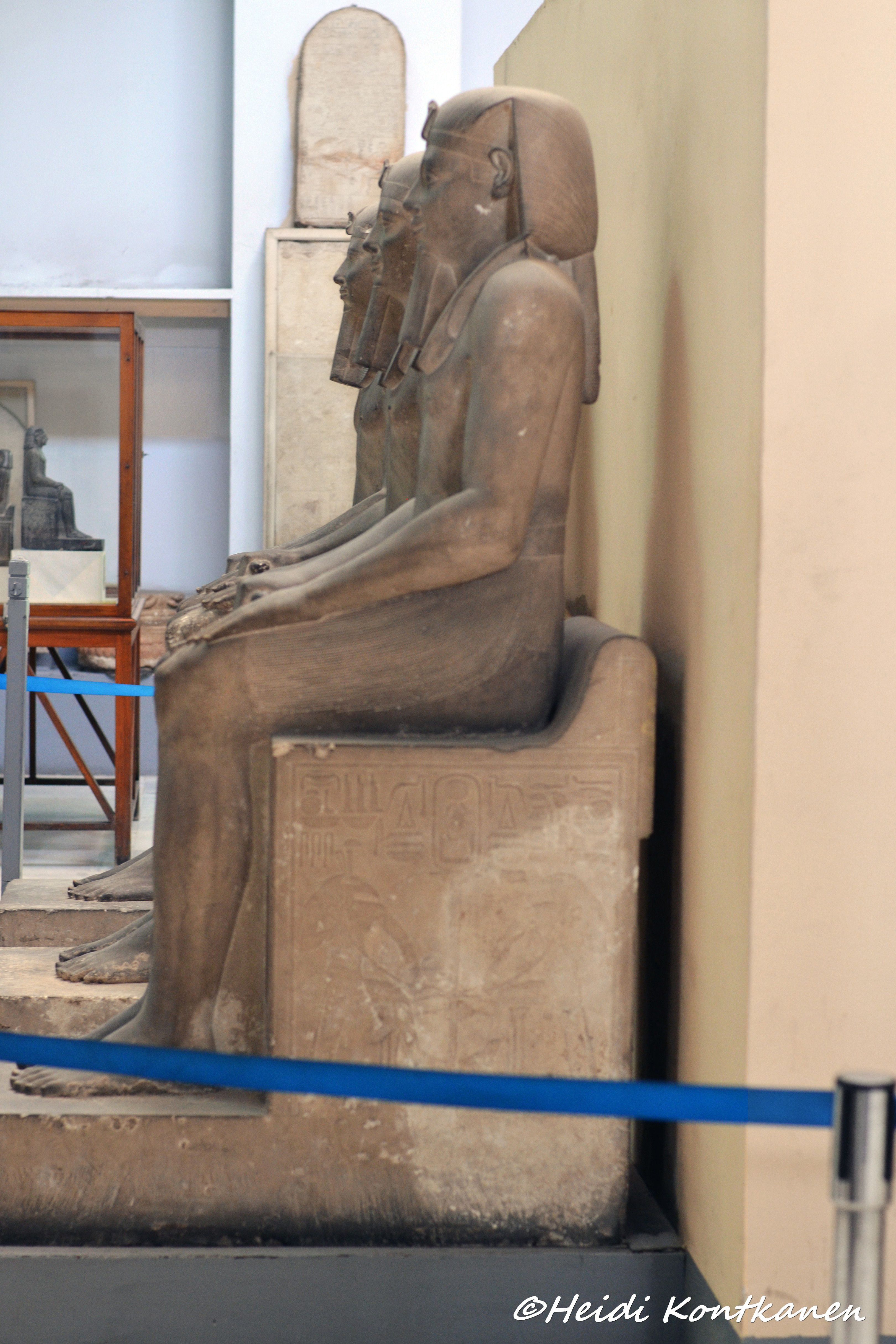
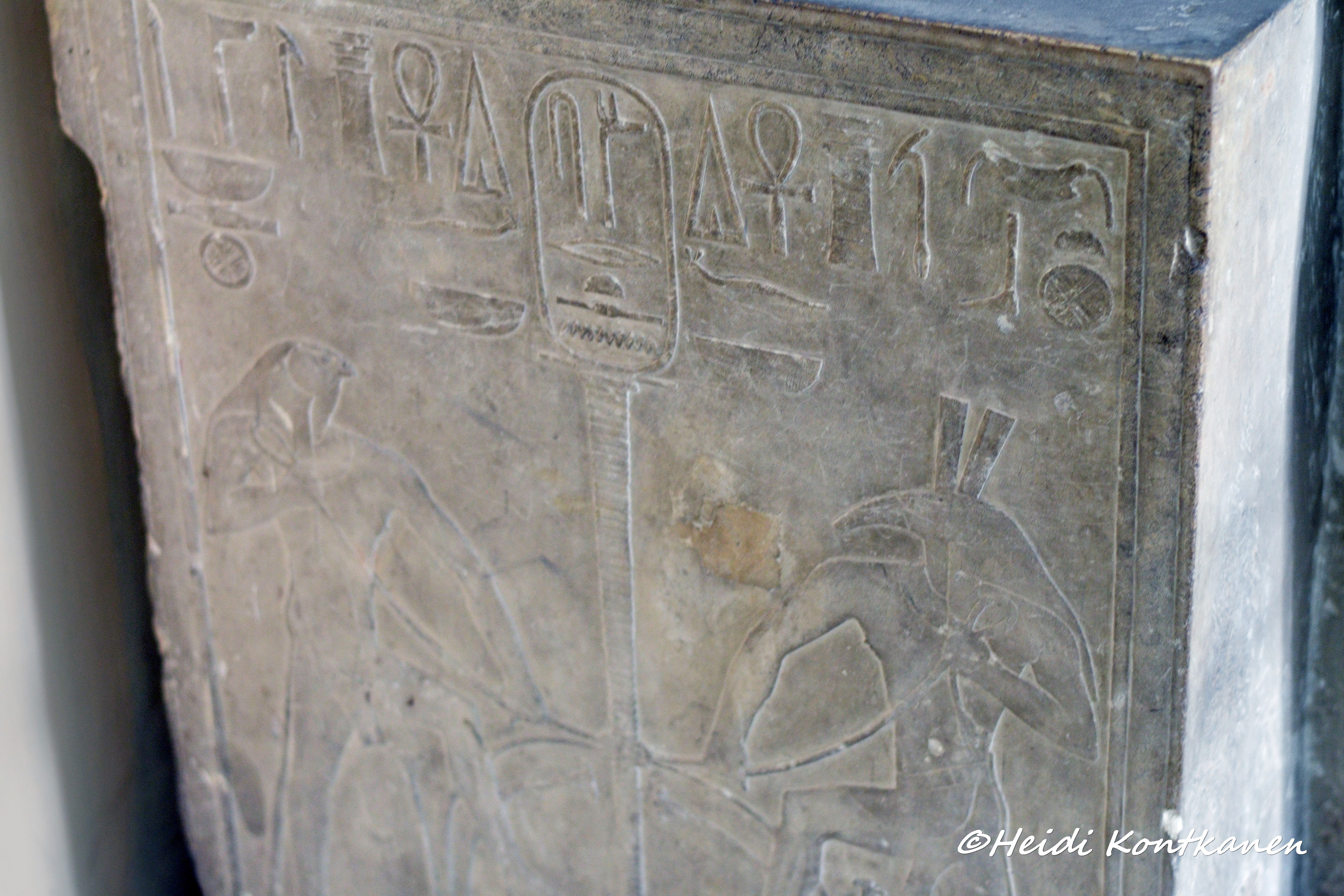
There is a suggestion of this in the enthroned statues, too. Senwosret rules, his foundation, his throne, exists because of this blessing.
Jimmy Dunn, the author of the touregypt article explains:
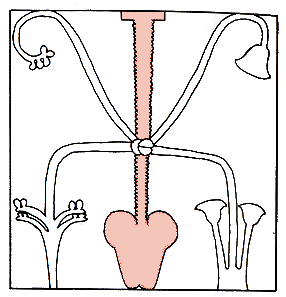
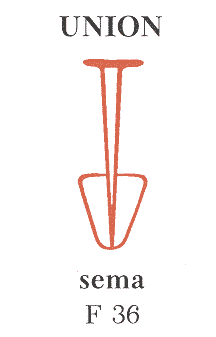
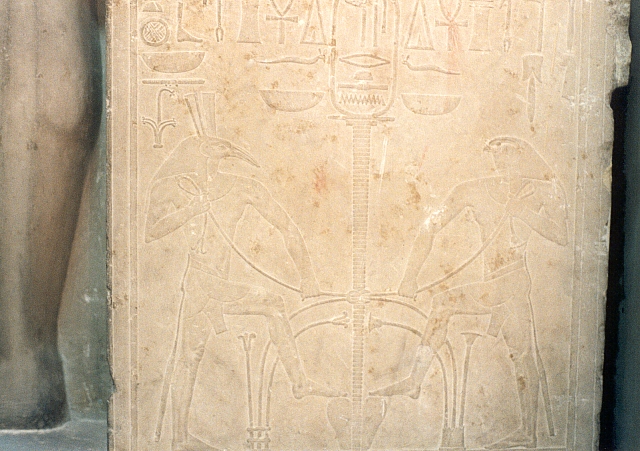
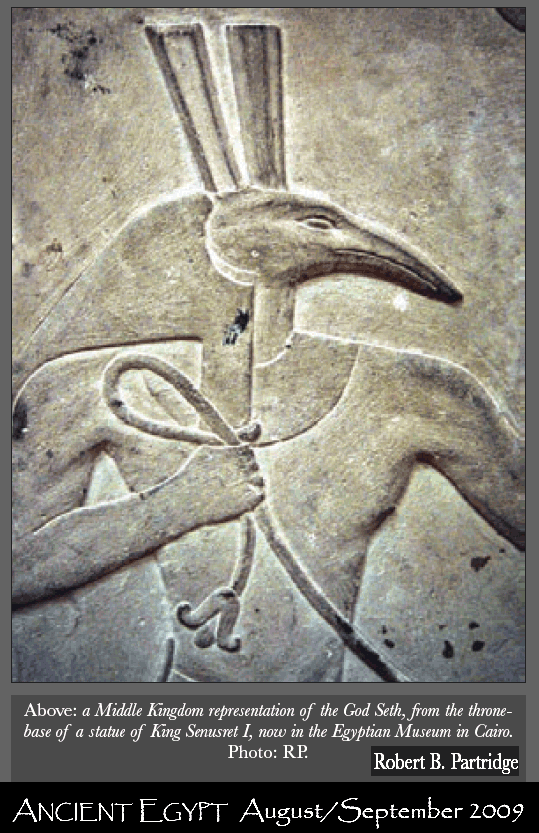
"Seth was also portrayed in a balanced, complementary role to Horus, so that the pair represented a bipolar, balanced embodiment of kingship. Therefore, on the side of the throne, Horus and Seth, symmetrical and equal, tie the papyrus and lotus around the sema-sign."
Mary Ann Sullivan of Bluffton University further explains:
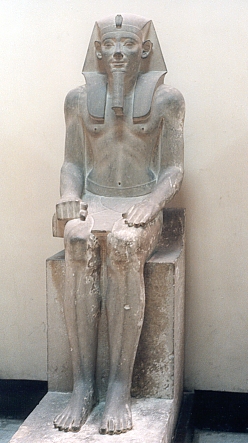
"This statue of Sesostris I (or Senusret) is one of ten almost identical sculptures found in his funerary temple. The sculptures are totally traditional royal portraits. The pose is conventional with the right hand holding the folded cloth and the left on the knee. The idealized Sesostris wears the simple kilt, the nemes with the uraeus, and the ceremonial beard. Sides of the thrones are decorated with images representing the union of Upper and Lower Egypt, sometimes the androgynous Nile gods (See also the reliefs at Abu Simbel) and sometimes, as below, depictions of Horus and Seth forming the hieroglyph for union, with the lotus and papyrus representing the south and the north."
She shares pictures of one at the Cairo Museum: