Earliest Known Representations of the Set-animal

"The Seth-animal has been connected with the ass, oryx antelope, greyhound, fennec, jerboa, camel, okapi, long-snouted mouse, aardvark or orycteropus, giraffe and a kind of hog or boar. A. S. Jensen 2) drew attention to the fact that it has also been regarded as a hare, jackal, tapir, long-snouted mormyr of the Nile or the nh bird of the Egyptians." _Seth, God of Confusion_, TeVelde, page 13

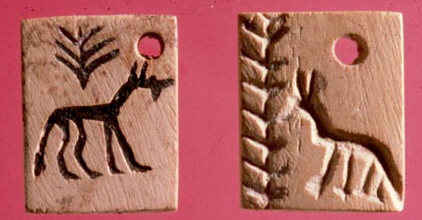
That's a huge number of associations. The antelope is among them, and this comb fragment from Naqada I looks quite a bit like the illustrations given in TeVelde's book:
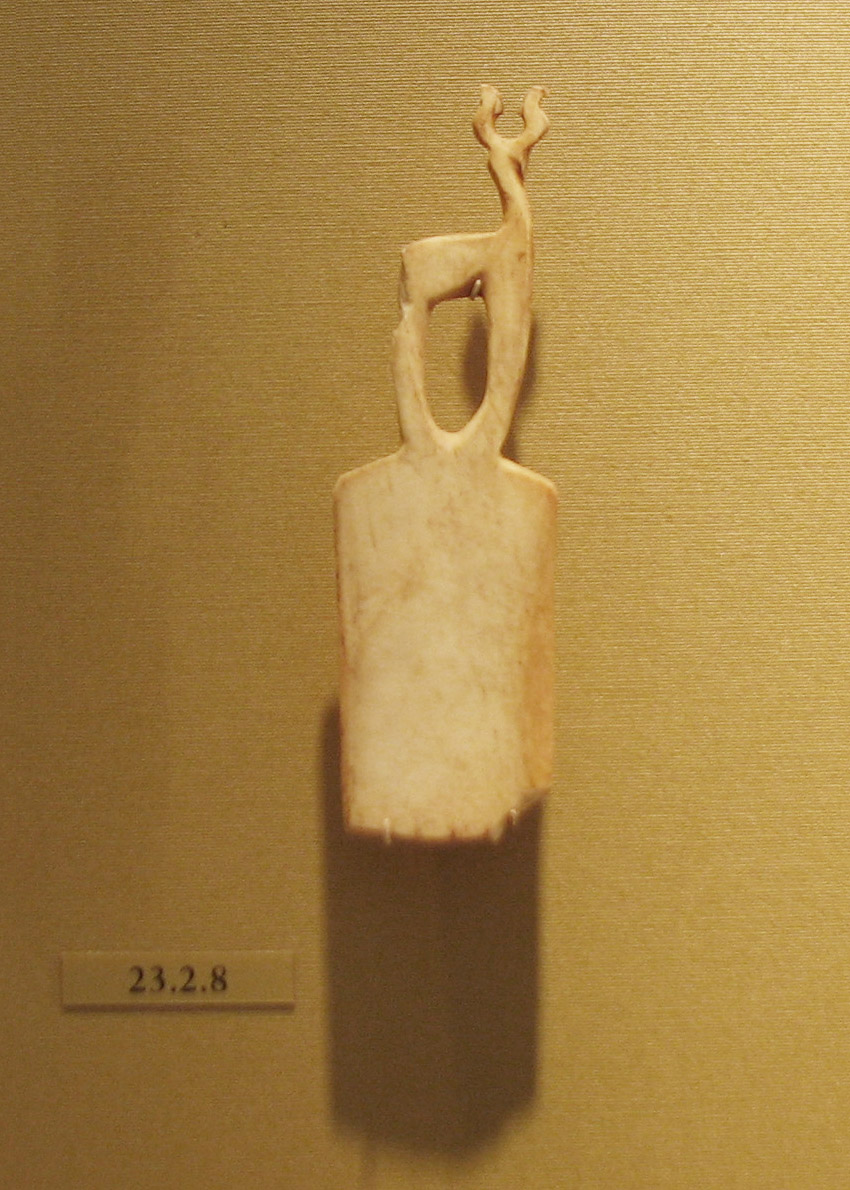

Bone Comb with an Antelope
Naqada I -early Naqada II (ca. 3900-3500 B.c.)
Metropolitan Museum, Rogers Fund, 1923, MMA 23.2.8
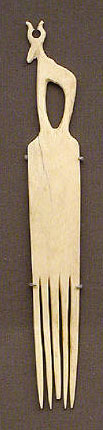

This comb at the Ashmolean (courtesy Jon Bodsworth's egyptarchive.co.uk)looks exactly like one in TeVelde's illustration:
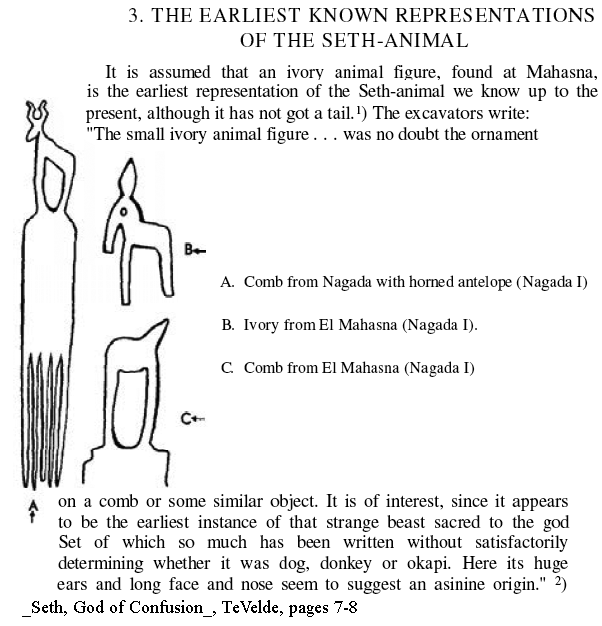
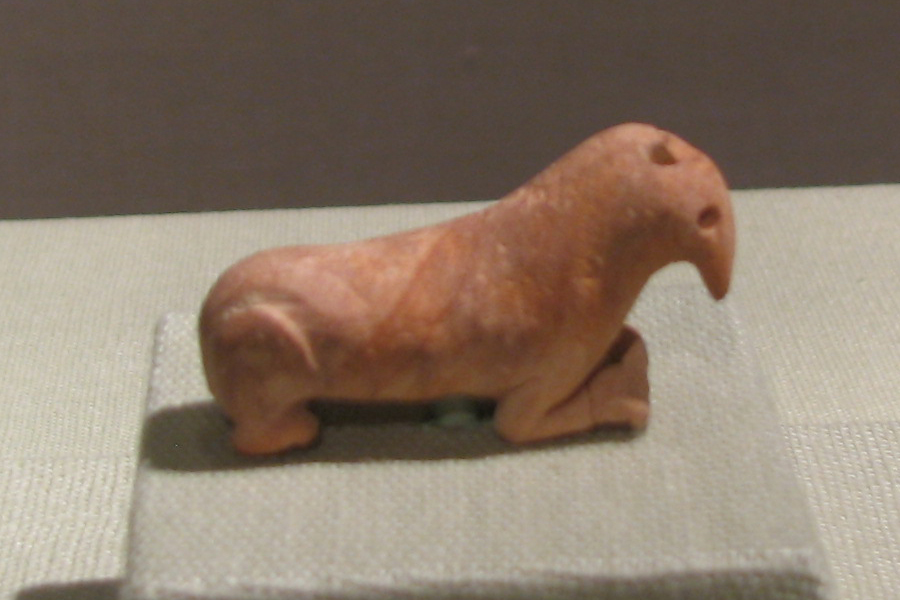
However, only example 'B' looks anything like the traditional Set animal with the long snout and tall ears. Here are some more early traditional examples:

These are labels from a tomb at Abydos of King Scorpian, a predynastic ruler around 3200BCE

How do we know they represent Set, and not, say, Anubis? It is because of the sedge hieroglyph in the one label:
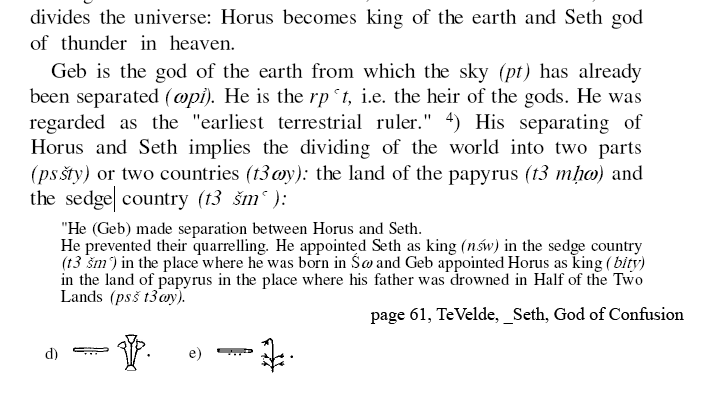
"He prevented their quarrelling. He appointed Seth as king in the sedge country in the place where he was born in and Geb appointed Horus as king in the land of papyrus" (_Seth, God of Confusion_, page 61)

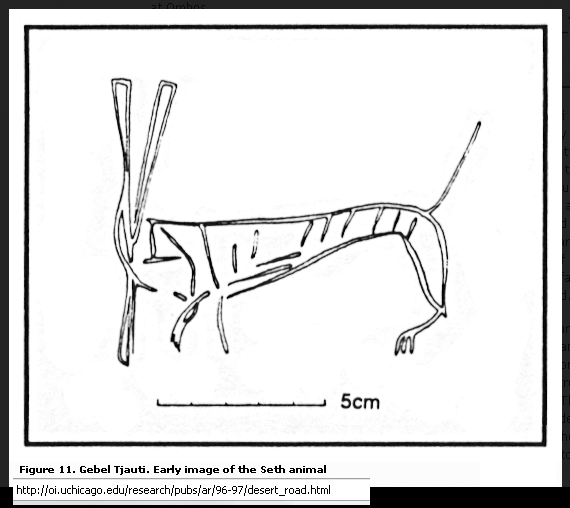
Also, I found the source of one image that's been floating the web:


It is at http://oi.uchicago.edu/research/pubs/ar/96-97/desert_road.html.

The author says of the Theban Desert road area called Gebel Tjauti:
"Nearby is a protodynastic depiction of the strange animal of the god Seth (fig. 11), the earliest certain depiction of this beast from the vicinity of Seth's cult center at Ombos."

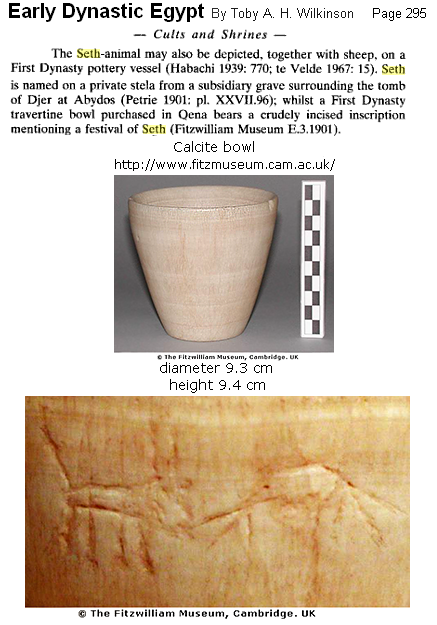
Having found one intriguing reference to Set in the Pyramid texts, I googled for more, and came to a few mentions in Toby A. H. Wilkinson's _Early Dynastic Egypt_:

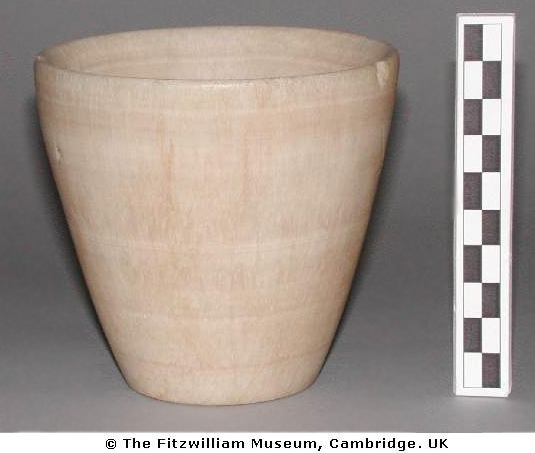
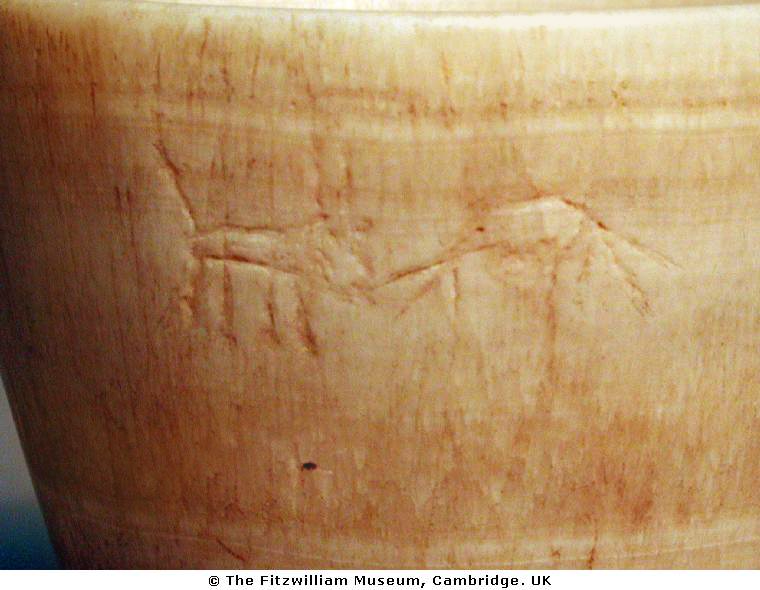
"The Seth-animal may also be depicted, together with sheep, on a First Dynasty pottery vessel (Habachi 1939: 770; te Velde 1967:15). Seth is named on a private stela from a subsidiary grave surrounding the tomb of Djer at Abydos (Petrie 1901; pl. XXVII.96); whilst a First Dynasty travertine bowl purchased in Qena bears a crudely incised inscription mentioning a festival of Seth (Fitzwilliam Museum E.3.1901). (pages 294-295)

I took that accession number to the museum and found the item mentioned:


Larger view, whole, larger view, detail

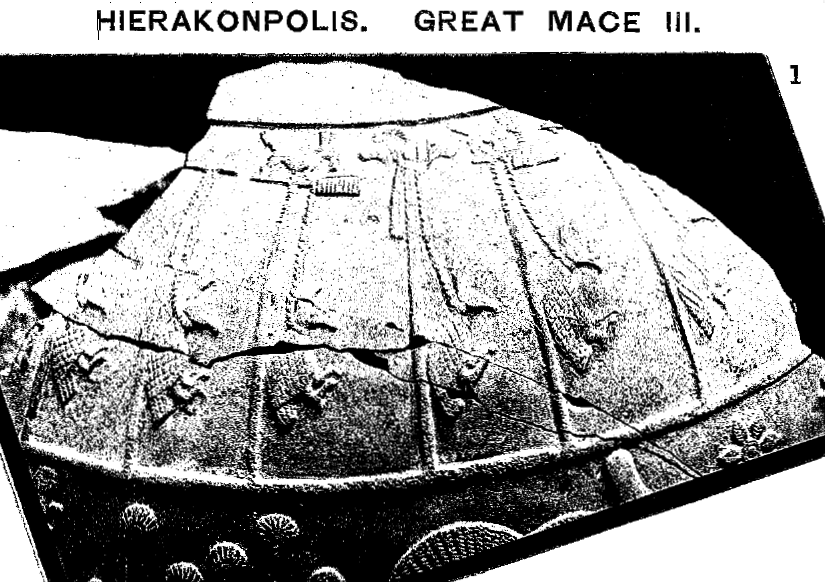
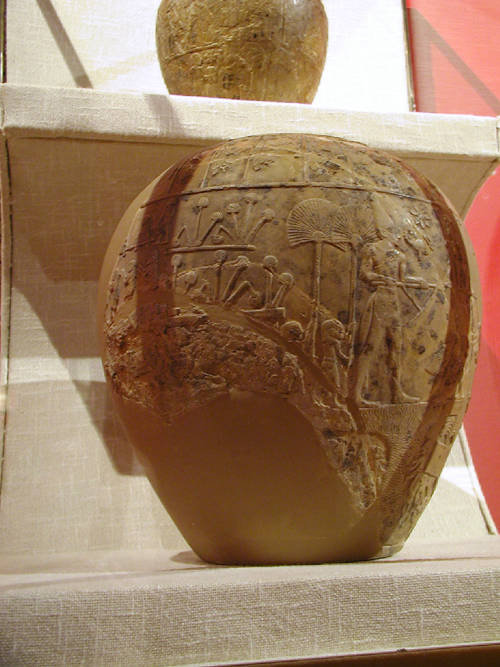
Another protodynastic Set image is found on the 'Scorpion King' Mace head. Wikipedia explains:

"Scorpion, also King Scorpion or Scorpion II refers to the second of two kings so-named of Upper Egypt during the Protodynastic Period.The only pictorial evidence of his existence is the so-called Scorpion Macehead that was found in the Main deposit by archeologists James E. Quibell and Frederick W. Green in a temple at Nekhen (Hierakonpolis) during the dig season of 1897/1898.[1] It is currently on display at the Ashmolean Museum, Oxford. The stratigraphy of this macehead was lost due to the methods of its excavators, but its style seems to date it to the very end of the Predynastic Period."

Quibell's book on the Hierakonpolis finds is available at Etana.org. The scan of his photo isn't so clear:


J. E. Quibell, Hieraconpolis I, London, 1900, pl. XXVI C

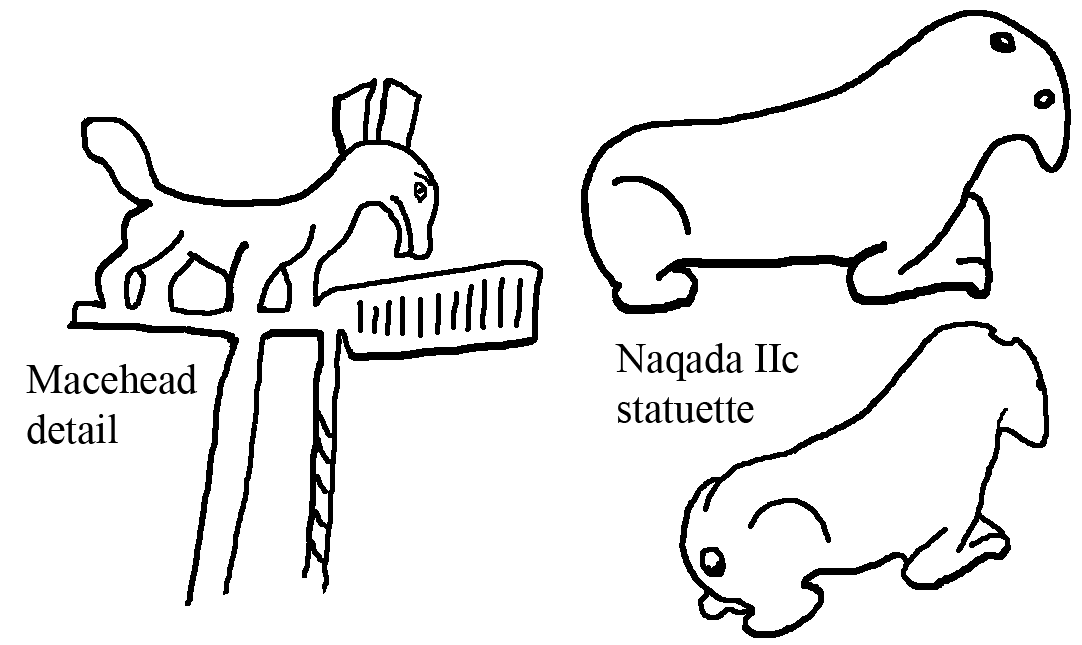
Krzysztof M. Cialowicz, when he proposed the king also wearing the red crown, gave a clearer drawing of this scene, a detail of which I show here:


Original scan here if not there

Hermann TeVelde shows the detail of this votive mace-head "on which undoubtedly Seth-animals with their truncated ears and raised tails are represented.3)":


From _Seth, God of Confusion_, page 12

Egyptarchive.co.uk/ also has a photo of the mace, restored to its original shape, here if not there.