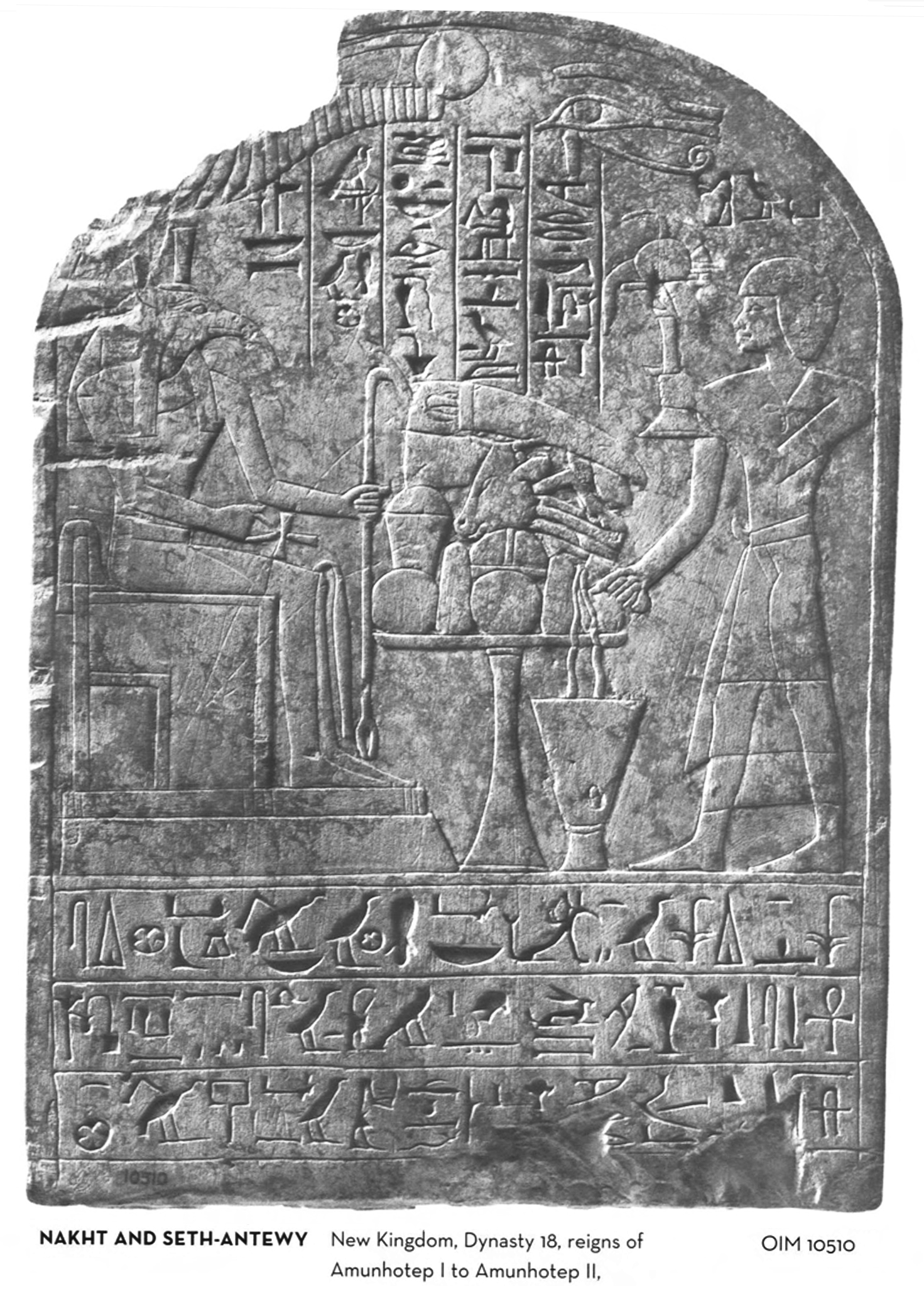
Nakht and Seth-Antewy
New Kingdom, Dynasty 18, reigns of Amunhotep I to Amunhotep II, ca. 1526-1400 B.C.
Limestone, H 11 3/4in W 8 7/8 D 2 3/4 - (H 30.2 W 22.7 D 7cm)
OIM 10510
Description from Griffith Institute pdf:
Description from Griffith Institute pdf:
|
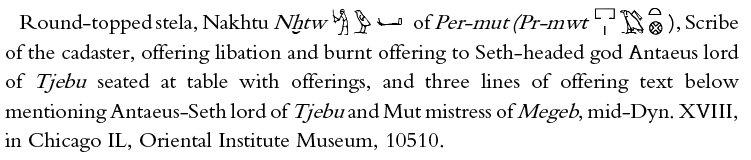
"Round-topped stela, Nakhtu [] of Per-mut [], Scribe of the cadaster, offering libation and burnt offering to Seth-headed god Antaeus lord of Tjebu seated at table with offerings, and three lines of offering text below
mentioning Antaeus-Seth lord of Tjebu and Mut mistress of Megeb, mid-Dyn. XVIII,
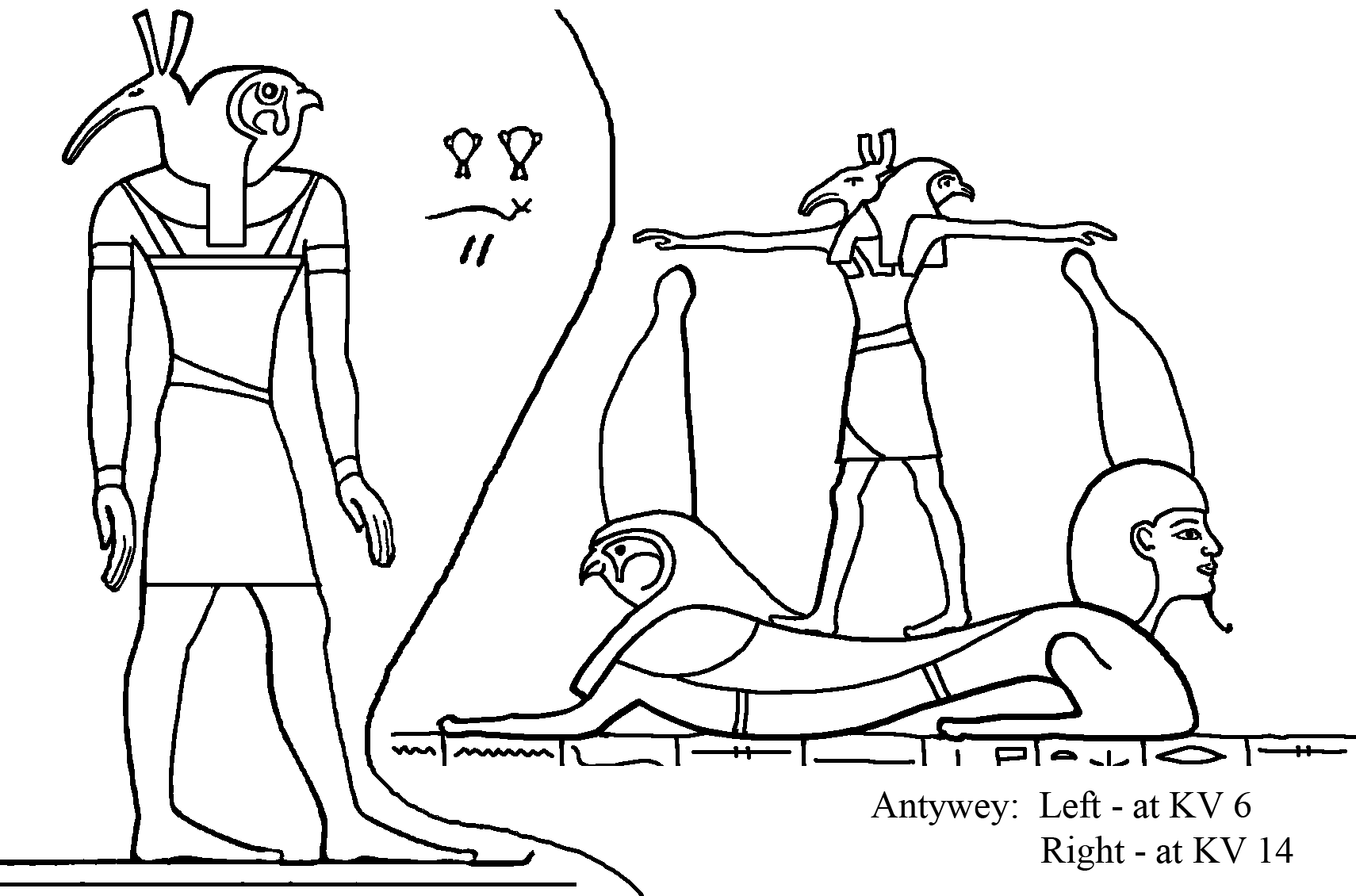
in Chicago IL, Oriental Institute Museum, 10510." Nakht, the scribe of the tax assessors, is making offerings to Set. "The text on the stela identifies the god in two different ways. The inscription in front of the god refers to him as Antewy, a combined form of Horus and Seth, while the horizontal text below the offering scene calls him Seth. This dual identity is a reflection of the belief that a god could have more than one nature -- and that he or she could have the attributes of several deities in order to express the extended power of the god." from _Treasures from the Collection of the Oriental Institute, University of Chicago_, by Emily Teeter, page 42.
Inscriptions: Lower section: A gift that the king gives to Seth, Lord of Tjebu (modern Qaw el Kebir) and to Mut, Mistress of Megeb (a site near Qaw el Kebir), that they may give life, prosperity, health, alertness, praise, love, and being on earth in their following, to the spirit of the Scribe of the Tax Assessors, a truly excellent man, whose character everyone knows: Nakht, of the estate of Mut. Treasures from the Collection of the Oriental Institute University of Chicago, page 42 TeVelde shows an image of this combined form:
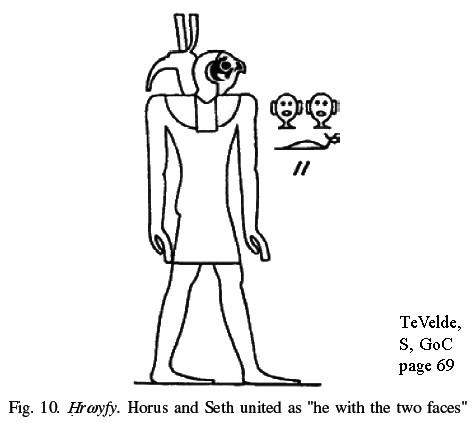 Either like this, or usually with a falcon's head for 'Antywey', as TeVelde spells it. _S,GoC_, page 68
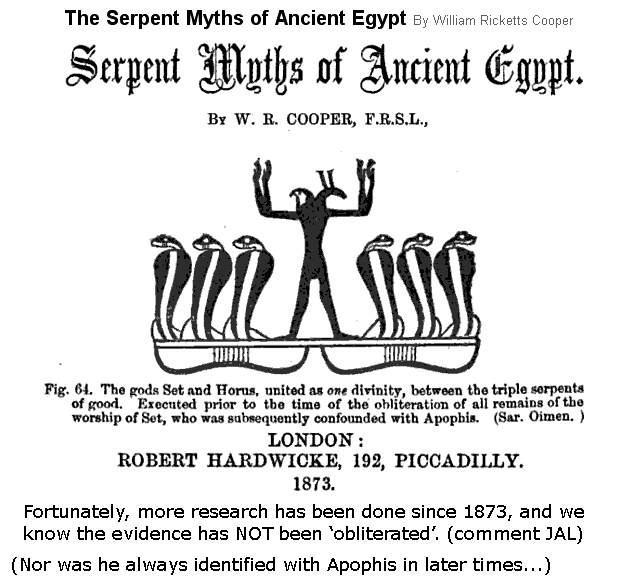 "The gods Set and Horus, united as one divinity, between the triple serpents of good...", _Serpent Myths of Ancient Egypt, William Ricketts Cooper
R.A. Schwaller de Lubicz gives a very similar image:
 From _Symbol and the Symbolic_, by R.A. Schwaller de Lubicz, page 37 (Larger available)
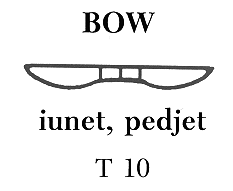 The bow could express a sort of 'might'. (From Wilkinson's _Reading Egyptian Art_)
 From _Symbol and the Symbolic_, by R.A. Schwaller de Lubicz, page 65 (Full view underneath) This is also seen in KV 14, which is an excerpt from this photo taken originally by "kairoinfo4u" who gives 'creative commons'...
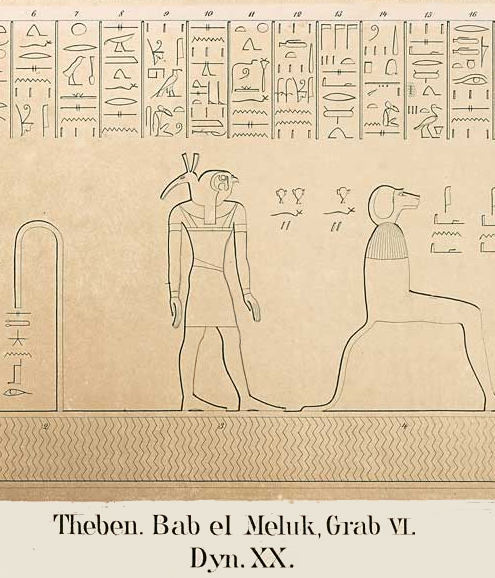 From Denkmäler aus Aegypten und Aethiopien, by Lepsius
Inscriptions:
Lower section: A gift that the king gives to Seth, Lord of Tjebu (modern Qaw el Kebir) and to Mut, Mistress of Megeb (a site near Qaw el Kebir), that they may give life, prosperity, health, alertness, praise, love, and being on earth in their following, to the spirit of the Scribe of the Tax Assessors, a truly excellent man, whose character everyone knows, Nakht, of the estate of Mut. |
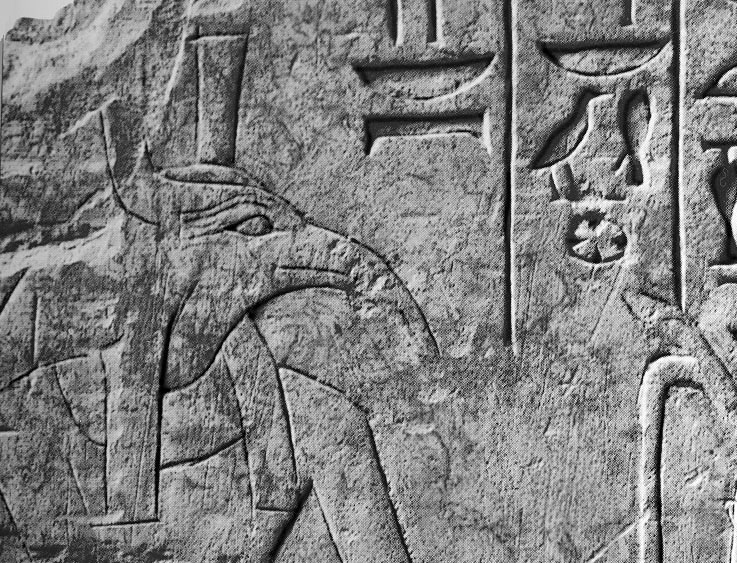

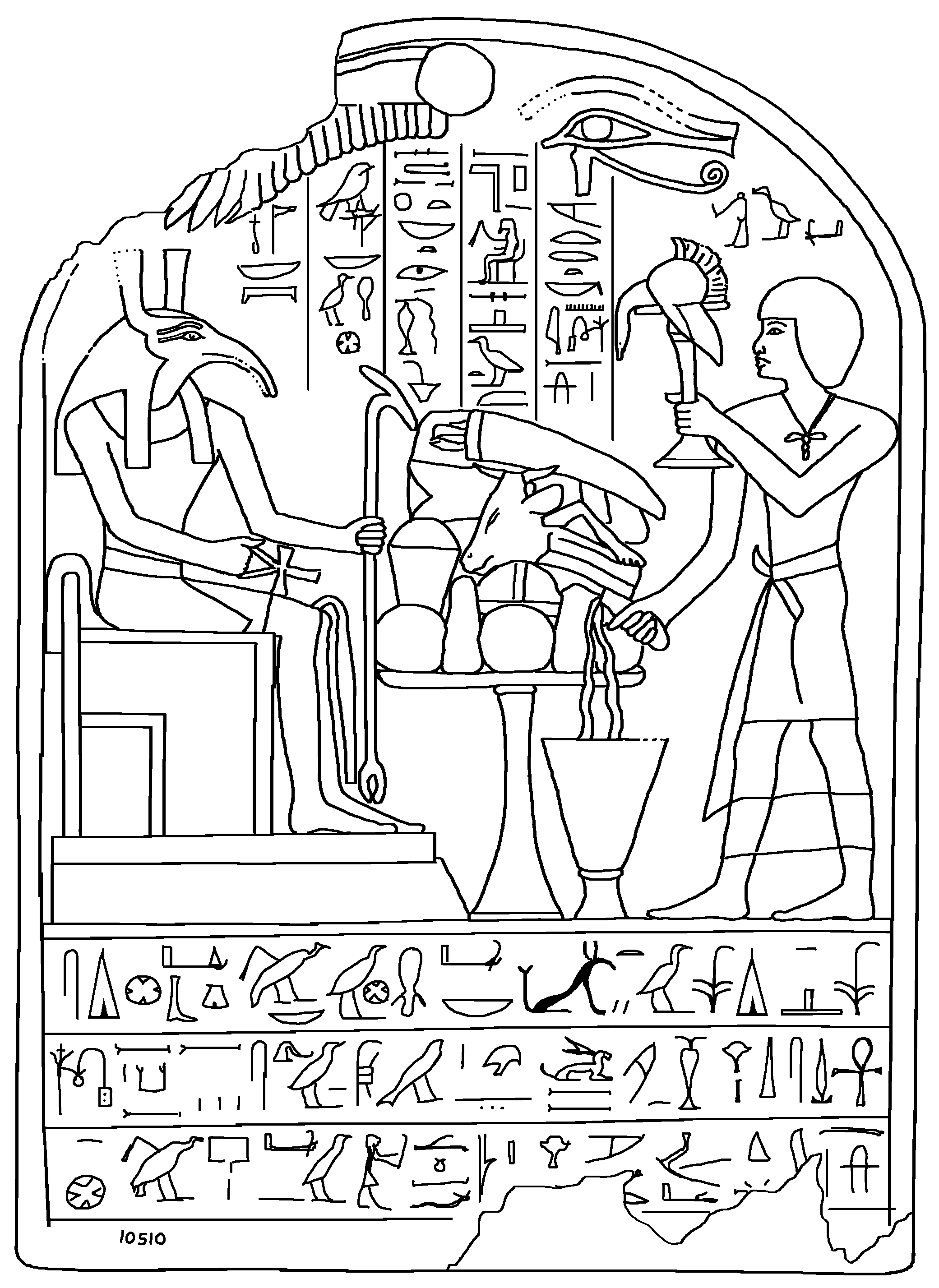
Trace of the top photo...