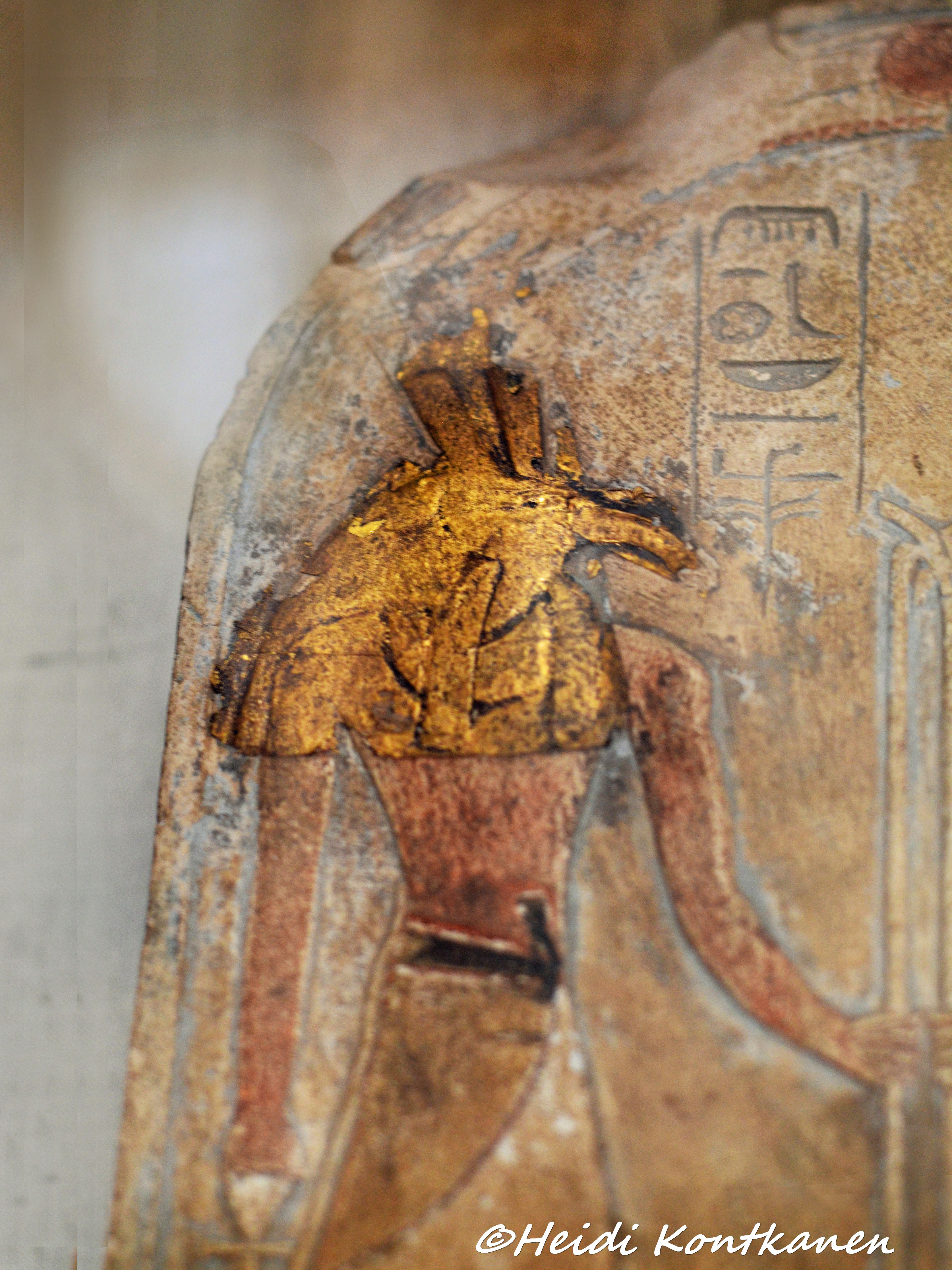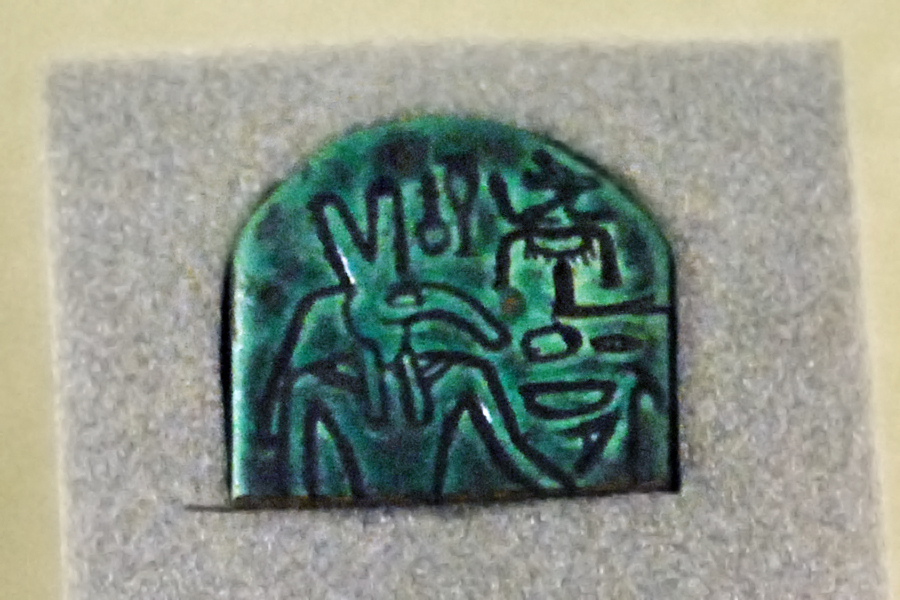
Photo taken by Heidi Kontkanon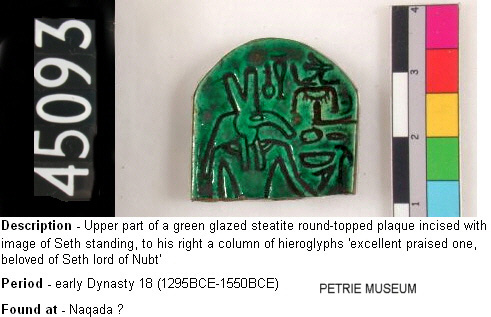
From Petrie Museum, University College, London, UC45093, early Dynasty 18, (1295BCE-1550BCE), Naqada?
Photo taken by Heidi Kontkanon
From Petrie Museum, University College, London, UC45093, early Dynasty 18, (1295BCE-1550BCE), Naqada?
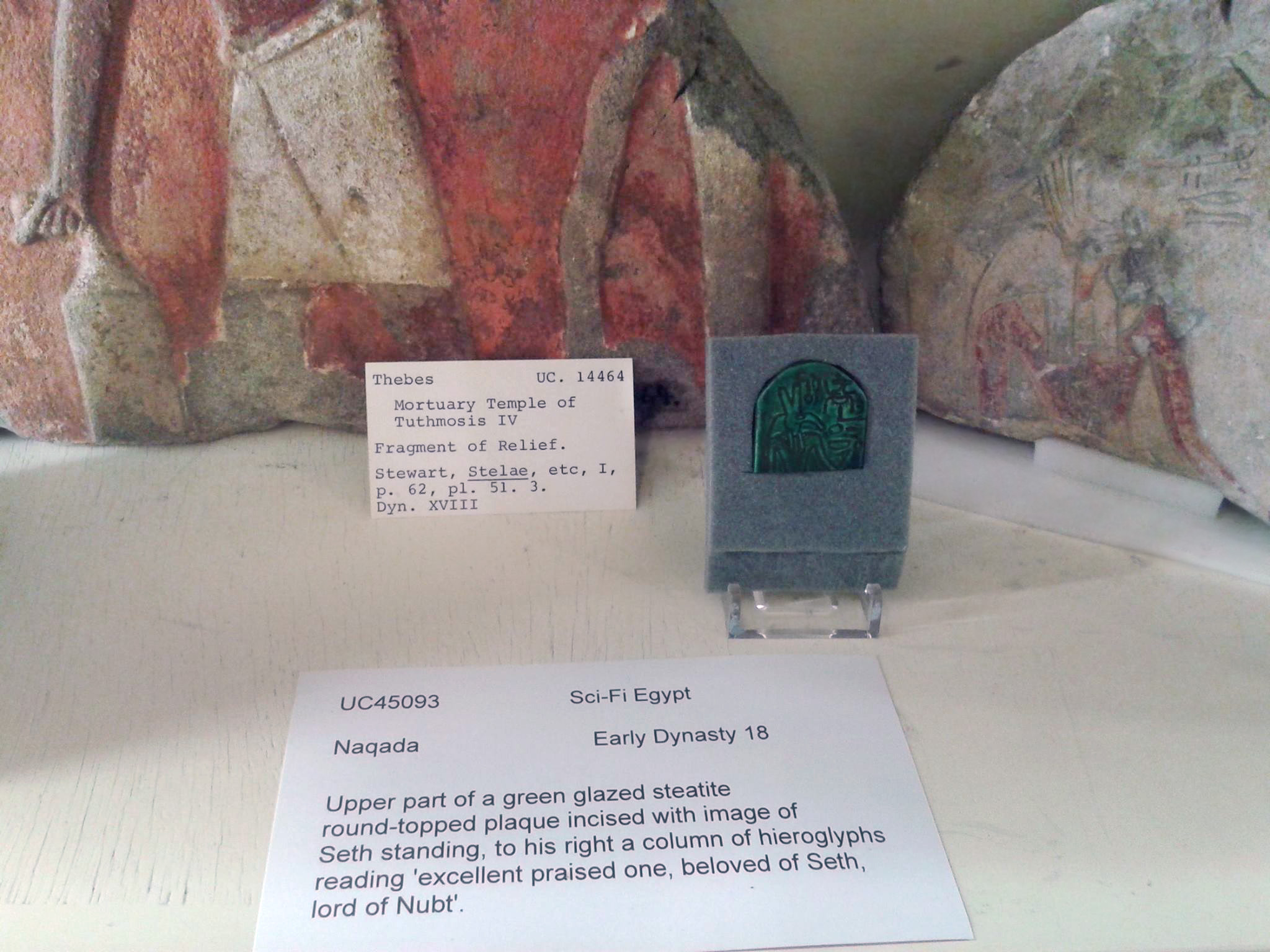 Photo taken by Kallista Silverheart Here we see the tiny stela in the larger context. To our right we can see a bit of stele UC 14447, as well. |
|
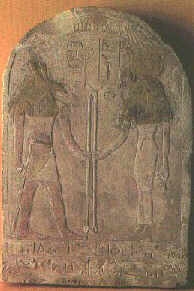
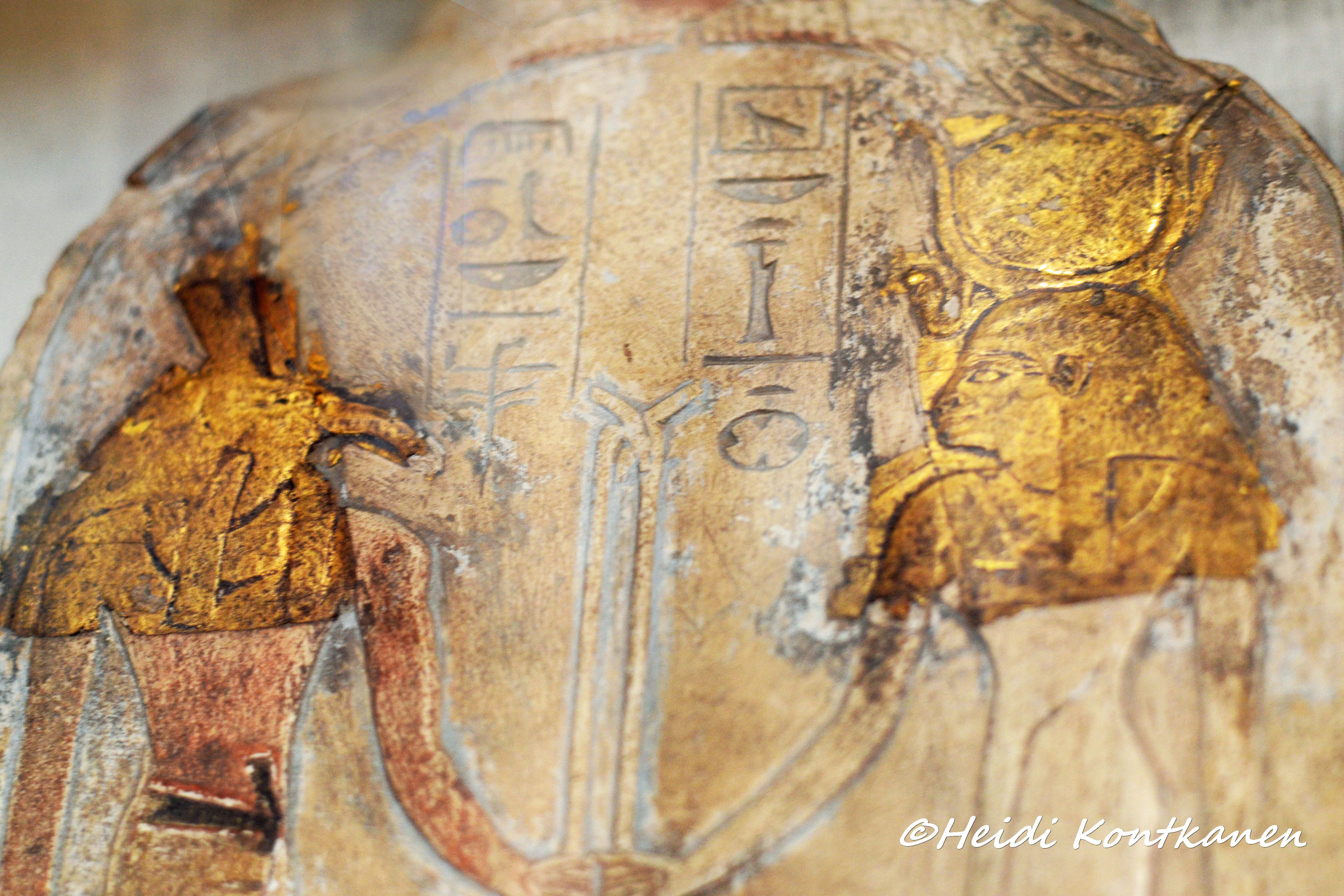
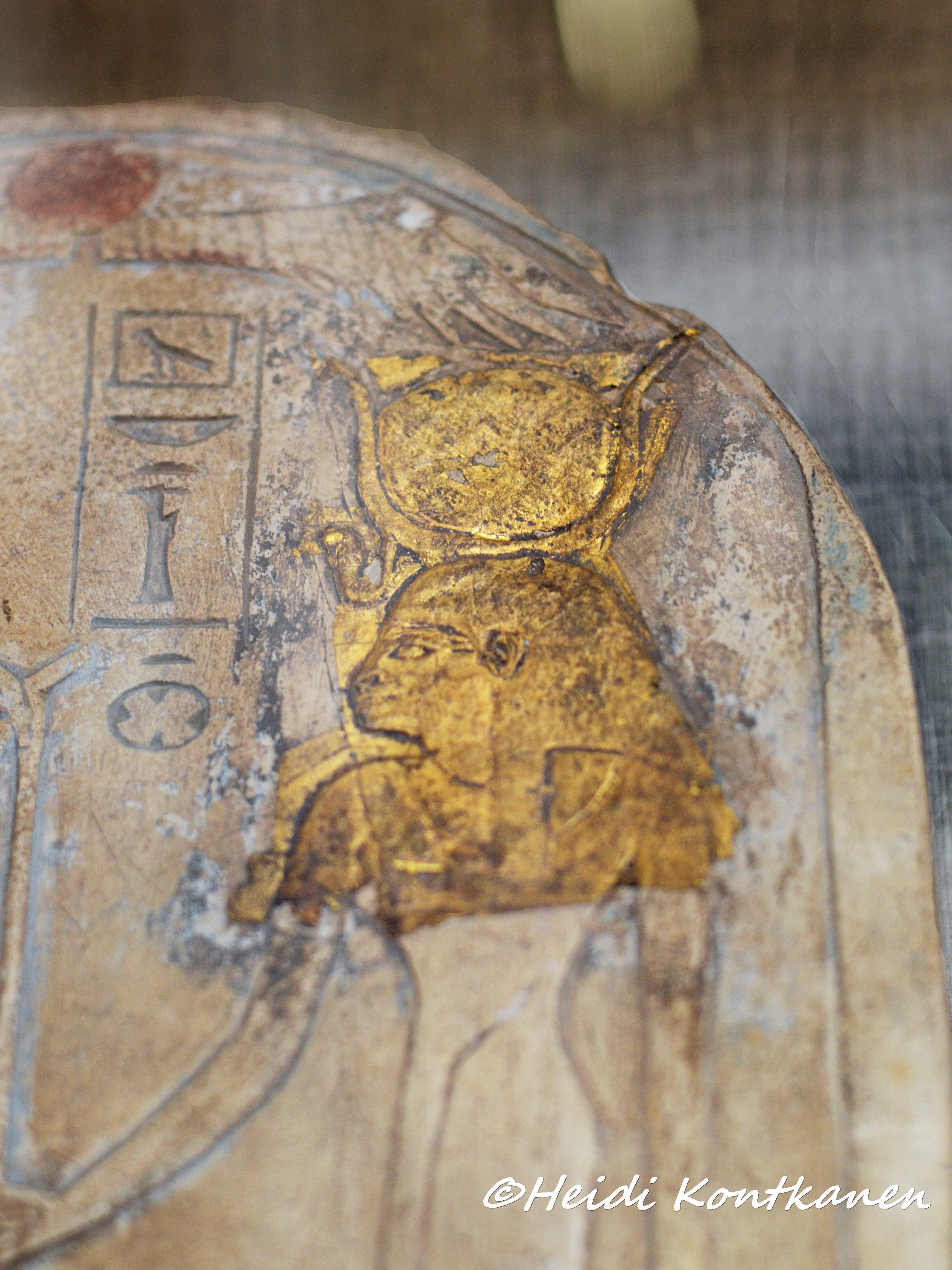
"Upper part of a green glazed steatite round-topped plaque incised with image of Seth standing, to his right a column of hieroglpyhs 'excellent praised one, beloved of Seth, Lord of Nubt'" Wikipedia says steatite is "relatively soft (because of the high talc content, talc being 1 on Mohs hardness scale), and may feel soapy when touched." While "The term steatite is sometimes used for soapstone", "It may also denote also a type of ceramic material made from soapstone with minor additives and heated to vitrify (to change or make into glass or a glassy substance, especially through heat fusion)." Perhaps that's how this piece got its green glaze. It then would be similar to faience, excepting instead of a mostly silica base, it is mostly talc based. I was surprised to find I'd omitted the following piece from the 'Setfind' gathers here, and perhaps it doesn't qualify for catagorization as a tiny plaque, Petrie describes it as "small": "The small limestone stele of Set and Hathor was found amid the main group of stairway tombs, buried a few inches only below the surface." (Six Temples at Thebes, Naqada and Ballas, page 42) After describing some Old Kingdom finds, Petrie speaks of "the far later limestone stela of Set and Hathor (XLIII). The heads are covered with gold leaf, put on carelessly, and spreading irregularly 1/4 inch beyond the outline." _Naqada and Ballas_, page 5 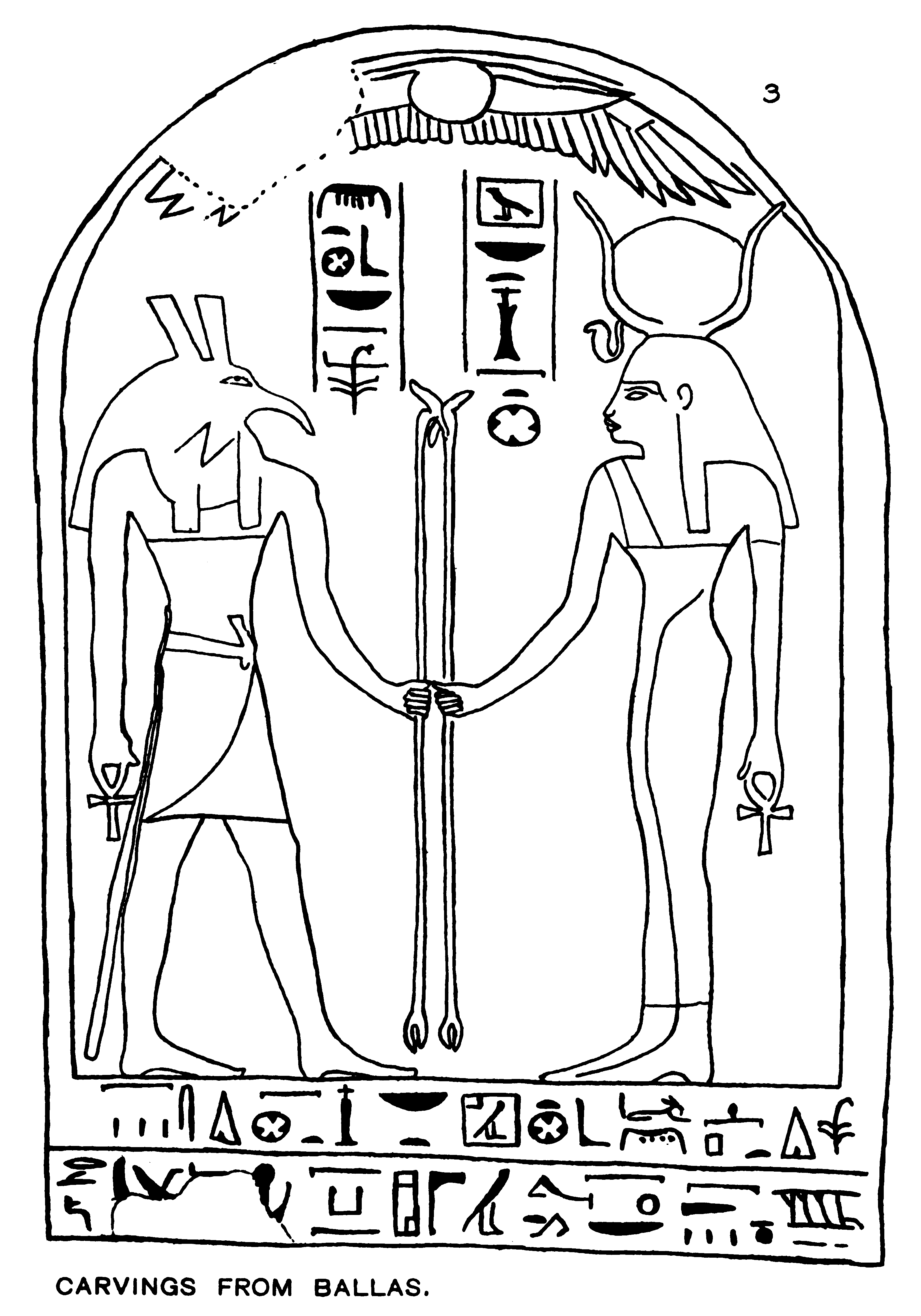 Petrie's illustration of the stele
The above photo is what counted for "better" ten years ago. Now in 2018, a favorite photographer has been to the Cairo museum with her camera, so now we really get to see that reddish coloring!
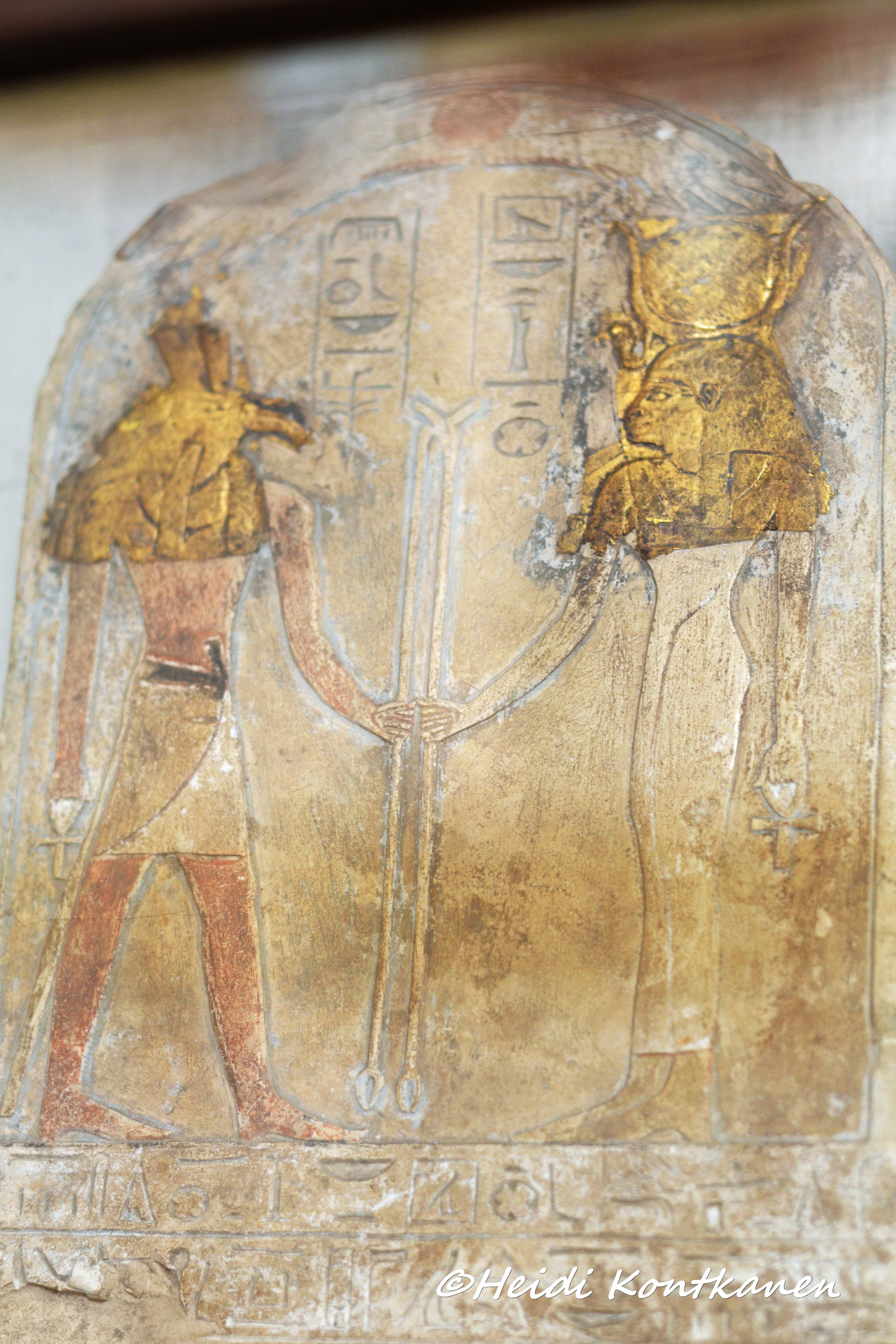 Photographed by Heidi Kontkanen
|